The opening · free to read
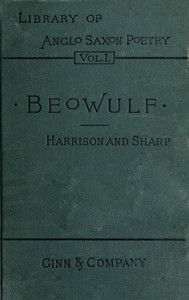
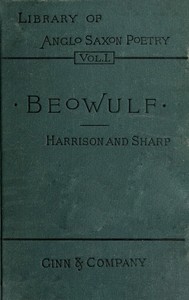
This text is a corrected version of the fourth edition of Harrison and Sharp in its entirety. It comes in two basic versions. The base version, available in 8-bit (Latin-1) text and HTML, presents the original text as printed. This file contains the original version. It preserves the source-text's idiosyncratic use of accented vowels with the exception of y-circumflex, which is replaced by y-acute (ý) to fit within the Latin-1 character set. Manifestly unintentional errors in the text have been corrected. In general, this has only been done when the text is internally inconsistent (e.g., a quotation in the glossary does not match the main text). Forms that represent deliberate editorial choice have not been altered, even where they appear wrong. (For example, some of the markings of vowel length do not reflect current scholarly consensus.) Where an uncorrected problem may confuse the reader, I have inserted a note explaining the difficulty, signed KTH. A complete list of the changes made is appended at the end of the file. In order to make the text more useful to modern readers, I have also produced a revised edition, available in Unicode (UTF-8) and HTML. Notes from the source text that indicate changes adopted in later editions have been incorporated directly into the text and apparatus. Further, long vowels are indicated with macrons, as is the common practice of most modern editions. Finally, the quantity of some words has been altered to the values currently accepted as correct. Quantities have not been changed when the difference is a matter of editorial interpretation (e.g., gäst vs. gæst in l. 102, etc.) A list of these altered quantities appears at the end of the list of corrections. Your browser must support the Unicode character set to use the revised version.
Explanation of the Vowel Accenting
In general, Harrison and Sharp use circumflex accents over vowels to mark long vowels. For ash, however, the actual character 'æ' represents the long vowel. Short ash is rendered with a-umlaut (ä). The long diphthongs (eo, ea, etc.) are indicated with an acute accent over the second vowel (eó, eá, etc.).
The book keeps going
Keep reading, and see it illustrated
Reading is free forever. Sign up and watch scenes appear while you read.
Scenes Storieta drew for other classics.