Storieta
English
Save & sign up

About this book

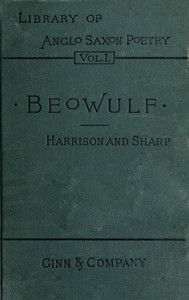
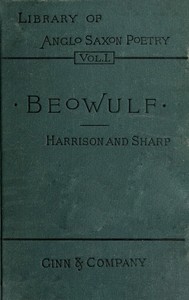
This volume presents the Old English epic Beowulf together with the fragmentary “Fight at Finnsburh,” reproduced from the fourth American edition edited by James A. Harrison and Robert Sharp. The text is offered in a revised Unicode format that incorporates the editors’ corrections, modern macrons for long vowels, and an extensive glossary drawn from the Heyne‑Socin tradition. The front matter explains how the revised edition differs from the earlier “basic” version, noting that only internal inconsistencies have been altered while deliberate editorial choices, such as vowel‑length markings that diverge from current scholarship, are retained. An appendix lists every change, and notes by the editors clarify difficult passages. The work also includes a bibliography of Beowulf scholarship and a brief glossary for the Finnsburh fragment, making it a comprehensive reference for students of the poem.

The language is the original Old English, rendered with scholarly diacritics and accompanied by detailed explanatory notes that illuminate the poem’s meter, diction, and historical context. Its style is academic rather than narrative, reflecting the late‑19th‑century philological approach of Harrison, Sharp, and their collaborators. Readers who enjoy close textual study, linguistic analysis, or the history of Anglo‑Saxon scholarship will find this edition rewarding, as will anyone seeking a reliable, annotated source for the poem and its fragment.

Characters in I. Beowulf

  • BeowulfTall, muscular Anglo‑Saxon hero, long braided hair, bronze mail shirt, sword at side
  • HrothgarAged king, white beard, regal cloak, gold‑trimmed tunic, seated on throne
  • GrendelGiant, shaggy monster, darkened skin, fierce eyes, clawed hands, tattered hide

Opening lines

It comes in two basic versions. The base version (available in 8-bit (Latin-1) text and HTML) presents the original text as printed. It preserves the source-text's idiosyncratic use of accented vowels with the exception of y-circumflex (ŷ), which is replaced by y-acute (ý) to fit within the Latin-1 character set. Manifestly unintentional errors in the text have been corrected. In general, this has only been done when the text is internally inconsistent (e.g., a quotation in the glossary does not match the main text). Forms that represent deliberate editorial choice have not been altered, even where they appear wrong. (For example, some of the markings of vowel length do not reflect current scholarly consensus.) Where an uncorrected problem may confuse the reader, I have inserted a note explaining the difficulty, signed KTH.

Keep reading free · start reading with no account

New illustrated classics

A new classic, drawn, in your inbox.

Once or twice a month: the latest books to get full character casts, scene art, and free comic editions. No account needed.