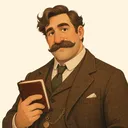
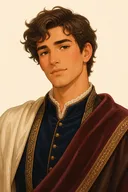
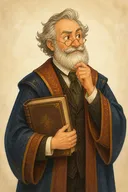
Ebenezer Scrooge
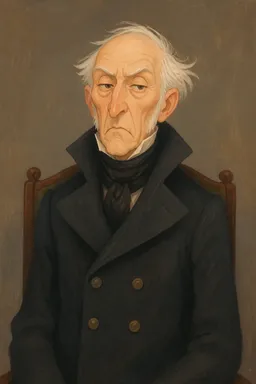
Also known as Scrooge, the miser, old Scrooge, the gentleman
A cold-hearted, miserly old man who learns the value of generosity and human connection through supernatural visits.

Drawn from who shares scenes with whom in the original text. Each bond is labeled from the pair's first scene together, so the map stays spoiler-light.
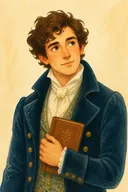
Also known as Scrooge, the miser, old Scrooge, the gentleman
A cold-hearted, miserly old man who learns the value of generosity and human connection through supernatural visits.

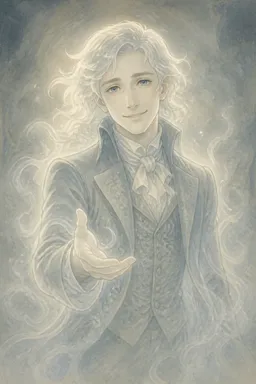
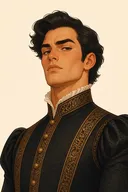
Also known as Marley, Marley's Ghost, the ghost of Jacob Marley, the former partner
Scrooge's deceased business partner who returns as a ghost to warn him about his impending fate.

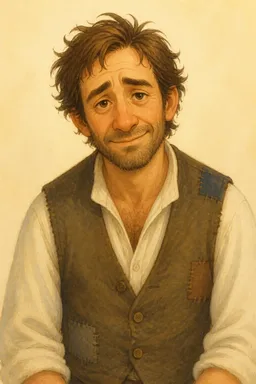
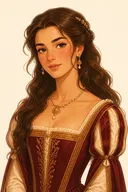
Also known as Bob, the clerk, Cratchit
Scrooge's overworked and underpaid clerk, a kind-hearted man who remains devoted to his family despite their poverty.
Bonds:TinyFather and son

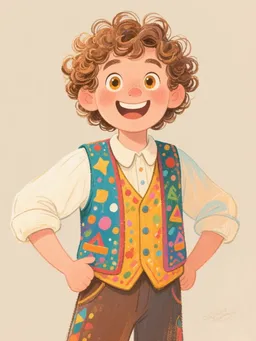
Also known as Tim, the little cripple, the little boy
Bob Cratchit's youngest son, a sweet and optimistic child who suffers from a physical disability.
Bonds:BobFather and son

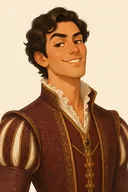
Also known as the nephew, Scrooge's nephew
Scrooge's cheerful and optimistic nephew who constantly invites his uncle to join his family for Christmas.
Bonds:EbenezerUncle and nephew
Storieta keeps this cast at your side while you read A Christmas Carol — portraits, names, and an ask-anything assistant that only knows what you've read so far. No spoilers, ever.
Full text of A Christmas Carol — the complete public-domain ebook, free.
This work is Charles Dickens’s “A Christmas Carol in Prose; Being a Ghost Story of Christmas,” a Victorian ghost tale set in London that foregrounds the miserly businessman Ebenezer Scroove and his dead partner, Jacob Marley. The opening pages present a practical guide to the various illustrated editions, then launch into a preface in which Dickens promises a “ghostly little book” that will “haunt their houses pleasantly.” The narrative begins with the unmistakable certainty that Marley is dead, using a series of legal confirmations and a relentless, almost comedic repetition of the phrase “as dead as a door‑nail.” From there Dickens sketches Scroove’s icy temperament, his disdain for Christmas, and his interaction with a cheerful nephew who extols the season’s charitable spirit. The scene is set in a fog‑filled, candle‑lit counting‑house, establishing the bleak urban backdrop that will host the forthcoming supernatural visitations.
Dickens writes in the richly descriptive, ironical prose of the 1840s, employing vivid similes, rhythmic repetition, and a brisk, dialogue‑driven pace that captures both the grim realism of London’s poor families and the eerie atmosphere of a ghost story. The voice is unmistakably Victorian, with its formal diction and moral undercurrent, while the illustrations by John Leech add visual flair typical of the period. Readers who enjoy darkly comic social commentary, atmospheric Victorian settings, and stories that blend moral reflection with supernatural intrigue will find this novella engaging.
Every cast illustrated from the original text.


+13


+2


+4


+8


+5


+5