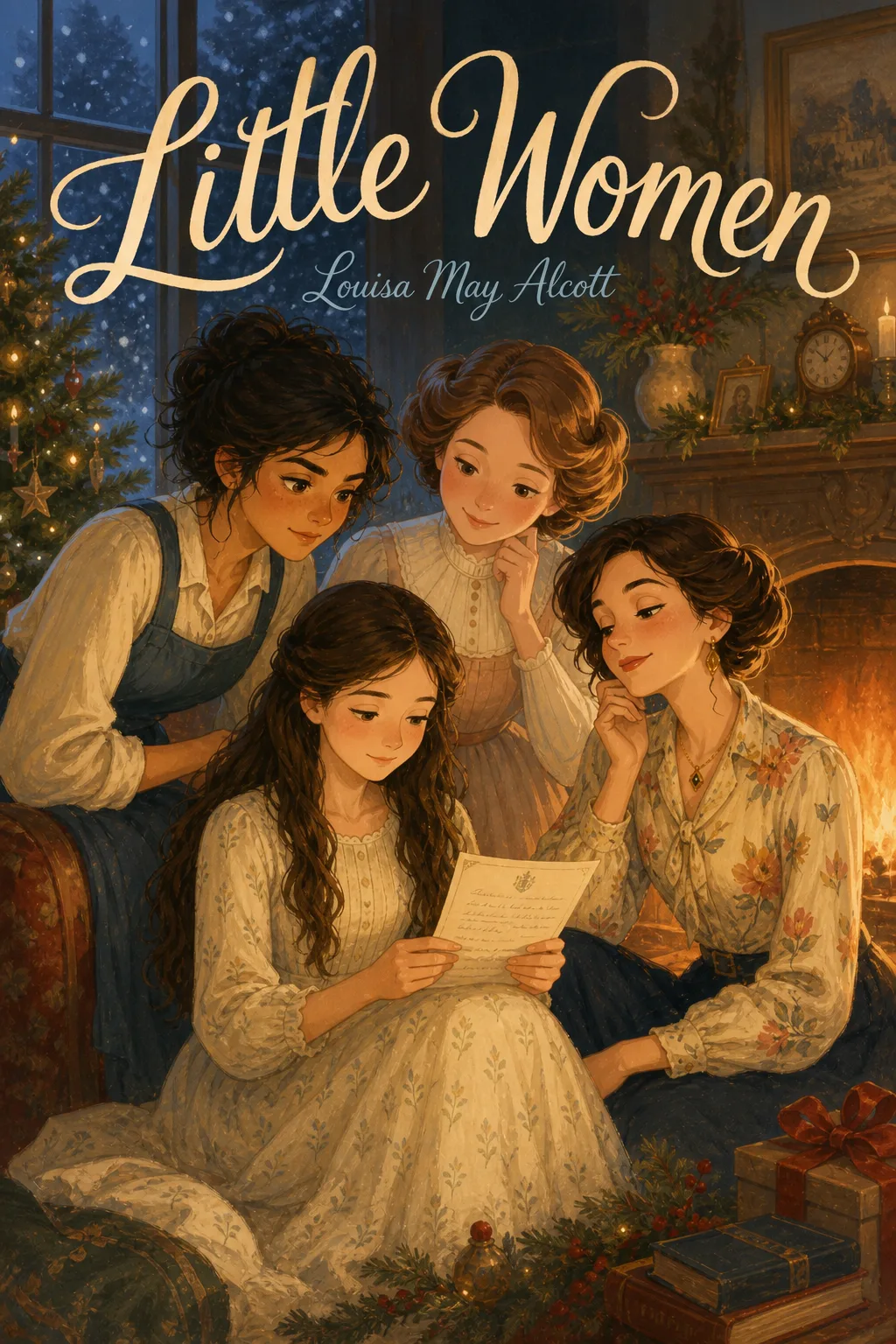
Little Women; Or, Meg, Jo, Beth, and Amy
by Louisa May Alcott

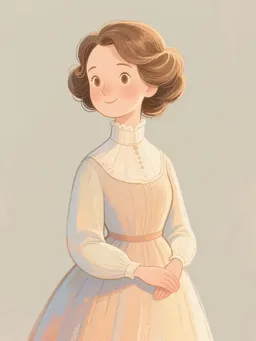
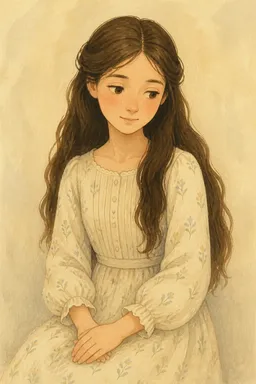



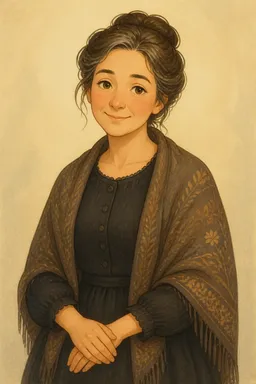
"'I don't understand what it's all about. Go back and begin it, child.'
"Back I went, and made the Primroses as interesting as ever I could. Once I was wicked enough to stop in a thrilling place, and say meekly, 'I'm afraid it tires you, ma'am; sha'n't I stop now?'
"She caught up her knitting, which had dropped out of her hands, gave me a sharp look through her specs, and said, in her short way,—
"'Finish the chapter, and don't be impertinent, miss.'"
"Did she own she liked it?" asked Meg.
"Oh, bless you, no! but she let old Belsham rest; and, when I ran back after my gloves this afternoon, there she was, so hard at the Vicar that she didn't hear me laugh as I danced a jig in the hall, because of the good time coming. What a pleasant life she might have, if she only chose. I don't envy her much, in spite of her money, for after all rich people have about as many worries as poor ones, I think," added Jo.
"That reminds me," said Meg, "that I've got something to tell. It isn't funny, like Jo's story, but I thought about it a good deal as I came home. At the Kings to-day I found everybody in a flurry, and one of the children said that her oldest brother had done something dreadful, and papa had sent him away. I heard Mrs. King crying and Mr. King talking very loud, and Grace and Ellen turned away their faces when they passed me, so I shouldn't see how red their eyes were. I didn't ask any questions, of course; but I felt so sorry for them, and was rather glad I hadn't any wild brothers to do wicked things and disgrace the family."
"I think being disgraced in school is a great deal try_inger_ than anything bad boys can do," said Amy, shaking her head, as if her experience of life had been a deep one. "Susie Perkins came to school to-day with a lovely red carnelian ring; I wanted it dreadfully, and wished I was her with all my might. Well, she drew a picture of Mr. Davis, with a monstrous nose and a hump, and the words, 'Young ladies, my eye is upon you!' coming out of his mouth in a balloon thing. We were laughing over it, when all of a sudden his eye was on us, and he ordered Susie to bring up her slate. She was _parry_lized with fright, but she went, and oh, what do you think he did? He took her by the ear, the ear! just fancy how horrid!—and led her to the recitation platform, and made her stand there half an hour, holding that slate so every one could see."
"Didn't the girls laugh at the picture?" asked Jo, who relished the scrape.
"Laugh? Not one! They sat as still as mice; and Susie cried quarts, I know she did. I didn't envy her then; for I felt that millions of carnelian rings wouldn't have made me happy, after that. I never, never should have got over such a agonizing mortification." And Amy went on with her work, in the proud consciousness of virtue, and the successful utterance of two long words in a breath.
"I saw something that I liked this morning, and I meant to tell it at dinner, but I forgot," said Beth, putting Jo's topsy-turvy basket in order as she talked. "When I went to get some oysters for Hannah, Mr. Laurence was in the fish-shop; but he didn't see me, for I kept behind a barrel, and he was busy with Mr. Cutter, the fish-man. A poor woman came in, with a pail and a mop, and asked Mr. Cutter if he would let her do some scrubbing for a bit of fish, because she hadn't any dinner for her children, and had been disappointed of a day's work. Mr. Cutter was in a hurry, and said 'No,' rather crossly; so she was going away, looking hungry and sorry, when Mr. Laurence hooked up a big fish with the crooked end of his cane, and held it out to her. She was so glad and surprised, she took it right in her arms, and thanked him over and over. He told her to 'go along and cook it,' and she hurried off, so happy! Wasn't it good of him? Oh, she did look so funny, hugging the big, slippery fish, and hoping Mr. Laurence's bed in heaven would be 'aisy.'"
When they had laughed at Beth's story, they asked their mother for one; and, after a moment's thought, she said soberly,—
"As I sat cutting out blue flannel jackets to-day, at the rooms, I felt very anxious about father, and thought how lonely and helpless we should be, if anything happened to him. It was not a wise thing to do; but I kept on worrying, till an old man came in, with an order for some clothes. He sat down near me, and I began to talk to him; for he looked poor and tired and anxious.
"'Have you sons in the army?' I asked; for the note he brought was not to me.
"'Yes, ma'am. I had four, but two were killed, one is a prisoner, and I'm going to the other, who is very sick in a Washington hospital,' he answered quietly.
"'You have done a great deal for your country, sir,' I said, feeling respect now, instead of pity.
"'Not a mite more than I ought, ma'am. I'd go myself, if I was any use; as I ain't, I give my boys, and give 'em free.'
"He spoke so cheerfully, looked so sincere, and seemed so glad to give his all, that I was ashamed of myself. I'd given one man, and thought it too much, while he gave four, without grudging them. I had all my girls to comfort me at home; and his last son was waiting, miles away, to say 'good by' to him, perhaps! I felt so rich, so happy, thinking of my blessings, that I made him a nice bundle, gave him some money, and thanked him heartily for the lesson he had taught me."
"Tell another story, mother,—one with a moral to it, like this. I like to think about them afterwards, if they are real, and not too preachy," said Jo, after a minute's silence.
Mrs. March smiled, and began at once; for she had told stories to this little audience for many years, and knew how to please them.
"Once upon a time, there were four girls, who had enough to eat and drink and wear, a good many comforts and pleasures, kind friends and parents, who loved them dearly, and yet they were not contented." (Here the listeners stole sly looks at one another, and began to sew diligently.) "These girls were anxious to be good, and made many excellent resolutions; but they did not keep them very well, and were constantly saying, 'If we only had this,' or 'If we could only do that,' quite forgetting how much they already had, and how many pleasant things they actually could do. So they asked an old woman what spell they could use to make them happy, and she said, 'When you feel discontented, think over your blessings, and be grateful.'" (Here Jo looked up quickly, as if about to speak, but changed her mind, seeing that the story was not done yet.)
"Being sensible girls, they decided to try her advice, and soon were surprised to see how well off they were. One discovered that money couldn't keep shame and sorrow out of rich people's houses; another that, though she was poor, she was a great deal happier, with her youth, health, and good spirits, than a certain fretful, feeble old lady, who couldn't enjoy her comforts; a third that, disagreeable as it was to help get dinner, it was harder still to have to go begging for it; and the fourth, that even carnelian rings were not so valuable as good behavior. So they agreed to stop complaining, to enjoy the blessings already possessed, and try to deserve them, lest they should be taken away entirely, instead of increased; and I believe they were never disappointed, or sorry that they took the old woman's advice."
"Now, Marmee, that is very cunning of you to turn our own stories against us, and give us a sermon instead of a romance!" cried Meg.
"I like that kind of sermon. It's the sort father used to tell us," said Beth thoughtfully, putting the needles straight on Jo's cushion.
"I don't complain near as much as the others do, and I shall be more careful than ever now; for I've had warning from Susie's downfall," said Amy morally.
"We needed that lesson, and we won't forget it. If we do, you just say to us, as old Chloe did in 'Uncle Tom,' 'Tink ob yer marcies, chillen! tink ob yer marcies!'" added Jo, who could not, for the life of her, help getting a morsel of fun out of the little sermon, though she took it to heart as much as any of them.
V.
BEING NEIGHBORLY.
"What in the world are you going to do now, Jo?" asked Meg, one snowy afternoon, as her sister came tramping through the hall, in rubber boots, old sack and hood, with a broom in one hand and a shovel in the other.
"Going out for exercise," answered Jo, with a mischievous twinkle in her eyes.
"I should think two long walks this morning would have been enough! It's cold and dull out; and I advise you to stay, warm and dry, by the fire, as I do," said Meg, with a shiver.
"Never take advice! Can't keep still all day, and, not being a pussycat, I don't like to doze by the fire. I like adventures, and I'm going to find some."
Meg went back to toast her feet and read "Ivanhoe"; and Jo began to dig paths with great energy. The snow was light, and with her broom she soon swept a path all round the garden, for Beth to walk in when the sun came out; and the invalid dolls needed air. Now, the garden separated the Marches' house from that of Mr. Laurence. Both stood in a suburb of the city, which was still country-like, with groves and lawns, large gardens, and quiet streets. A low hedge parted the two estates. On one side was an old, brown house, looking rather bare and shabby, robbed of the vines that in summer covered its walls, and the flowers which then surrounded it. On the other side was a stately stone mansion, plainly betokening every sort of comfort and luxury, from the big coach-house and well-kept grounds to the conservatory and the glimpses of lovely things one caught between the rich curtains. Yet it seemed a lonely, lifeless sort of house; for no children frolicked on the lawn, no motherly face ever smiled at the windows, and few people went in and out, except the old gentleman and his grandson.
To Jo's lively fancy, this fine house seemed a kind of enchanted palace, full of splendors and delights, which no one enjoyed. She had long wanted to behold these hidden glories, and to know the "Laurence boy," who looked as if he would like to be known, if he only knew how to begin. Since the party, she had been more eager than ever, and had planned many ways of making friends with him; but he had not been seen lately, and Jo began to think he had gone away, when she one day spied a brown face at an upper window, looking wistfully down into their garden, where Beth and Amy were snow-balling one another.
"That boy is suffering for society and fun," she said to herself. "His grandpa does not know what's good for him, and keeps him shut up all alone. He needs a party of jolly boys to play with, or somebody young and lively. I've a great mind to go over and tell the old gentleman so!"
The idea amused Jo, who liked to do daring things, and was always scandalizing Meg by her queer performances. The plan of "going over" was not forgotten; and when the snowy afternoon came, Jo resolved to try what could be done. She saw Mr. Laurence drive off, and then sallied out to dig her way down to the hedge, where she paused, and took a survey. All quiet,—curtains down at the lower windows; servants out of sight, and nothing human visible but a curly black head leaning on a thin hand at the upper window.
"There he is," thought Jo, "poor boy! all alone and sick this dismal day. It's a shame! I'll toss up a snow-ball, and make him look out, and then say a kind word to him."
Up went a handful of soft snow, and the head turned at once, showing a face which lost its listless look in a minute, as the big eyes brightened and the mouth began to smile. Jo nodded and laughed, and flourished her broom as she called out,—
"How do you do? Are you sick?"
Laurie opened the window, and croaked out as hoarsely as a raven,—
"Better, thank you. I've had a bad cold, and been shut up a week."
"I'm sorry. What do you amuse yourself with?"
"Nothing; it's as dull as tombs up here."
"Don't you read?"
"Not much; they won't let me."
"Can't somebody read to you?"
"Grandpa does, sometimes; but my books don't interest him, and I hate to ask Brooke all the time."
"Have some one come and see you, then."
"There isn't any one I'd like to see. Boys make such a row, and my head is weak."
"Isn't there some nice girl who'd read and amuse you? Girls are quiet, and like to play nurse."
"Don't know any."
"You know us," began Jo, then laughed, and stopped.
"So I do! Will you come, please?" cried Laurie.
"I'm not quiet and nice; but I'll come, if mother will let me. I'll go ask her. Shut that window, like a good boy, and wait till I come."
With that, Jo shouldered her broom and marched into the house, wondering what they would all say to her. Laurie was in a flutter of excitement at the idea of having company, and flew about to get ready; for, as Mrs. March said, he was "a little gentleman," and did honor to the coming guest by brushing his curly pate, putting on a fresh collar, and trying to tidy up the room, which, in spite of half a dozen servants, was anything but neat. Presently there came a loud ring, then a decided voice, asking for "Mr. Laurie," and a surprised-looking servant came running up to announce a young lady.
"All right, show her up, it's Miss Jo," said Laurie, going to the door of his little parlor to meet Jo, who appeared, looking rosy and kind and quite at her ease, with a covered dish in one hand and Beth's three kittens in the other.
"Here I am, bag and baggage," she said briskly. "Mother sent her love, and was glad if I could do anything for you. Meg wanted me to bring some of her blanc-mange; she makes it very nicely, and Beth thought her cats would be comforting. I knew you'd laugh at them, but I couldn't refuse, she was so anxious to do something."
It so happened that Beth's funny loan was just the thing; for, in laughing over the kits, Laurie forgot his bashfulness, and grew sociable at once.
"That looks too pretty to eat," he said, smiling with pleasure, as Jo uncovered the dish, and showed the blanc-mange, surrounded by a garland of green leaves, and the scarlet flowers of Amy's pet geranium.
"It isn't anything, only they all felt kindly, and wanted to show it. Tell the girl to put it away for your tea: it's so simple, you can eat it; and, being soft, it will slip down without hurting your sore throat. What a cosy room this is!"
"It might be if it was kept nice; but the maids are lazy, and I don't know how to make them mind. It worries me, though."
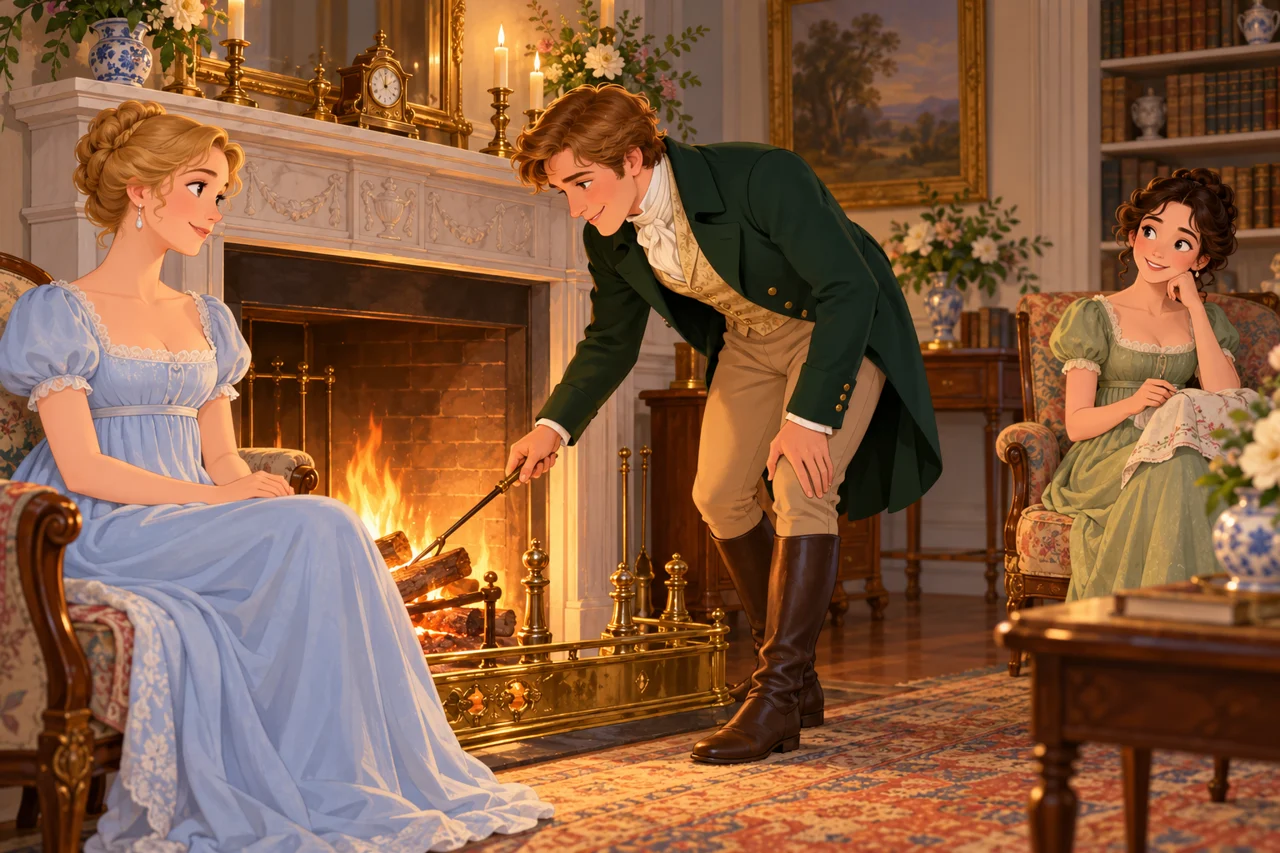
"I'll right it up in two minutes; for it only needs to have the hearth brushed, so,—and the things made straight on the mantel-piece so,—and the books put here, and the bottles there, and your sofa turned from the light, and the pillows plumped up a bit. Now, then, you're fixed."
And so he was; for, as she laughed and talked, Jo had whisked things into place, and given quite a different air to the room. Laurie watched her in respectful silence; and when she beckoned him to his sofa, he sat down with a sigh of satisfaction, saying gratefully,—
"How kind you are! Yes, that's what it wanted. Now please take the big chair, and let me do something to amuse my company."
"No; I came to amuse you. Shall I read aloud?" and Jo looked affectionately toward some inviting books near by.
"Thank you; I've read all those, and if you don't mind, I'd rather talk," answered Laurie.
"Not a bit; I'll talk all day if you'll only set me going. Beth says I never know when to stop."
"Is Beth the rosy one, who stays at home a good deal, and sometimes goes out with a little basket?" asked Laurie, with interest.
"Yes, that's Beth; she's my girl, and a regular good one she is, too."
"The pretty one is Meg, and the curly-haired one is Amy, I believe?"
"How did you find that out?"
Laurie colored up, but answered frankly, "Why, you see, I often hear you calling to one another, and when I'm alone up here, I can't help looking over at your house, you always seem to be having such good times. I beg your pardon for being so rude, but sometimes you forget to put down the curtain at the window where the flowers are; and when the lamps are lighted, it's like looking at a picture to see the fire, and you all round the table with your mother; her face is right opposite, and it looks so sweet behind the flowers, I can't help watching it. I haven't got any mother, you know;" and Laurie poked the fire to hide a little twitching of the lips that he could not control.
The solitary, hungry look in his eyes went straight to Jo's warm heart. She had been so simply taught that there was no nonsense in her head, and at fifteen she was as innocent and frank as any child. Laurie was sick and lonely; and, feeling how rich she was in home-love and happiness, she gladly tried to share it with him. Her face was very friendly and her sharp voice unusually gentle as she said,—
"We'll never draw that curtain any more, and I give you leave to look as much as you like. I just wish, though, instead of peeping, you'd come over and see us. Mother is so splendid, she'd do you heaps of good, and Beth would sing to you if I begged her to, and Amy would dance; Meg and I would make you laugh over our funny stage properties, and we'd have jolly times. Wouldn't your grandpa let you?"
"I think he would, if your mother asked him. He's very kind, though he does not look so; and he lets me do what I like, pretty much, only he's afraid I might be a bother to strangers," began Laurie, brightening more and more.
"We are not strangers, we are neighbors, and you needn't think you'd be a bother. We want to know you, and I've been trying to do it this ever so long. We haven't been here a great while, you know, but we have got acquainted with all our neighbors but you."
"You see grandpa lives among his books, and doesn't mind much what happens outside. Mr. Brooke, my tutor, doesn't stay here, you know, and I have no one to go about with me, so I just stop at home and get on as I can."
"That's bad. You ought to make an effort, and go visiting everywhere you are asked; then you'll have plenty of friends, and pleasant places to go to. Never mind being bashful; it won't last long if you keep going."
Laurie turned red again, but wasn't offended at being accused of bashfulness; for there was so much good-will in Jo, it was impossible not to take her blunt speeches as kindly as they were meant.
"Do you like your school?" asked the boy, changing the subject, after a little pause, during which he stared at the fire, and Jo looked about her, well pleased.
The book keeps going
Keep reading, and see it illustrated
Reading is free forever. Sign up and watch scenes appear while you read.

Scenes Storieta drew for other classics.
About this book
Little Women is domestic, autobiographical fiction centered on Meg, Jo, Beth, and Amy March, four sisters growing up in a New England household. Their days combine family conversations, sewing, reading, school embarrassments, household duties, moral lessons, and lively attempts to make the most of limited means. The sisters differ sharply in temperament: Jo is energetic and irreverent, Meg thoughtful, Amy self-conscious and ambitious, and Beth gentle and observant. Around them are a devoted mother, absent family concerns connected to the army, neighbors of very different circumstances, and the daily challenges of young women learning how to be generous, responsible, and content.
Alcott’s prose is warm, conversational, and frequently humorous, with lively dialogue and a fond eye for each girl’s particular habits and mistakes. Its nineteenth-century setting gives weight to domestic work, propriety, education, charity, and the changing expectations placed on women, while the family scenes remain intimate and spirited. The book suits readers who enjoy character-driven fiction, sisterly relationships, New England domestic life, playful moral instruction, and stories where ordinary choices reveal personality.
Shelved under Children & Young Adult Reading, Novels, Autobiographical fiction, Young women
Also illustrated
Explore more illustrated classics.
Open any of them and start reading the same way.