The story these characters live in
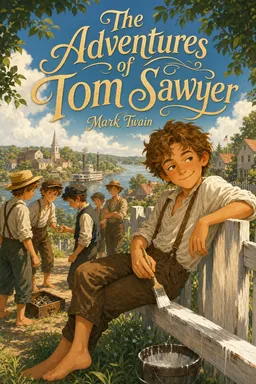
Adventures of Huckleberry Finn is a humorous adventure story and bildungsroman narrated by Huck Finn, a boy resisting the “civilizing” rules of respectable life. In Missouri, Huck finds enforced manners, lessons, religious instruction, and household routine stifling, while freedom means old clothes, the woods, a pipe, and the company of his friend Tom Sawyer. Nighttime secrecy, superstition, river travel, caves, and the formation of a boys’ band of robbers give the book a playful, exploratory energy. Male friendship stands at its center, alongside a close attention to the lives, beliefs, and social divisions of the community around Huck.
Twain gives Huck a distinct vernacular voice: direct, observant, mischievous, and often unintentionally funny. His spelling and grammar follow speech rather than formal literary English, and his practical judgments expose the oddities and contradictions of adult behavior. The nineteenth-century Missouri setting appears through its social customs, religious expectations, household discipline, river culture, and the era’s language, including racist terms and representations that can be troubling. Readers drawn to comic first-person narration, coming-of-age stories, boys’ adventures, and richly rendered period voices may appreciate its lively mix of humor, unease, and companionship.