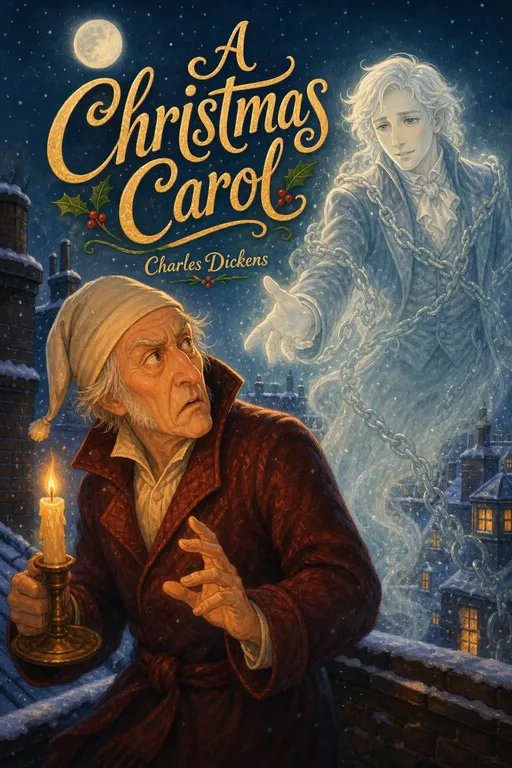
A Christmas Carol
by Charles Dickens1843
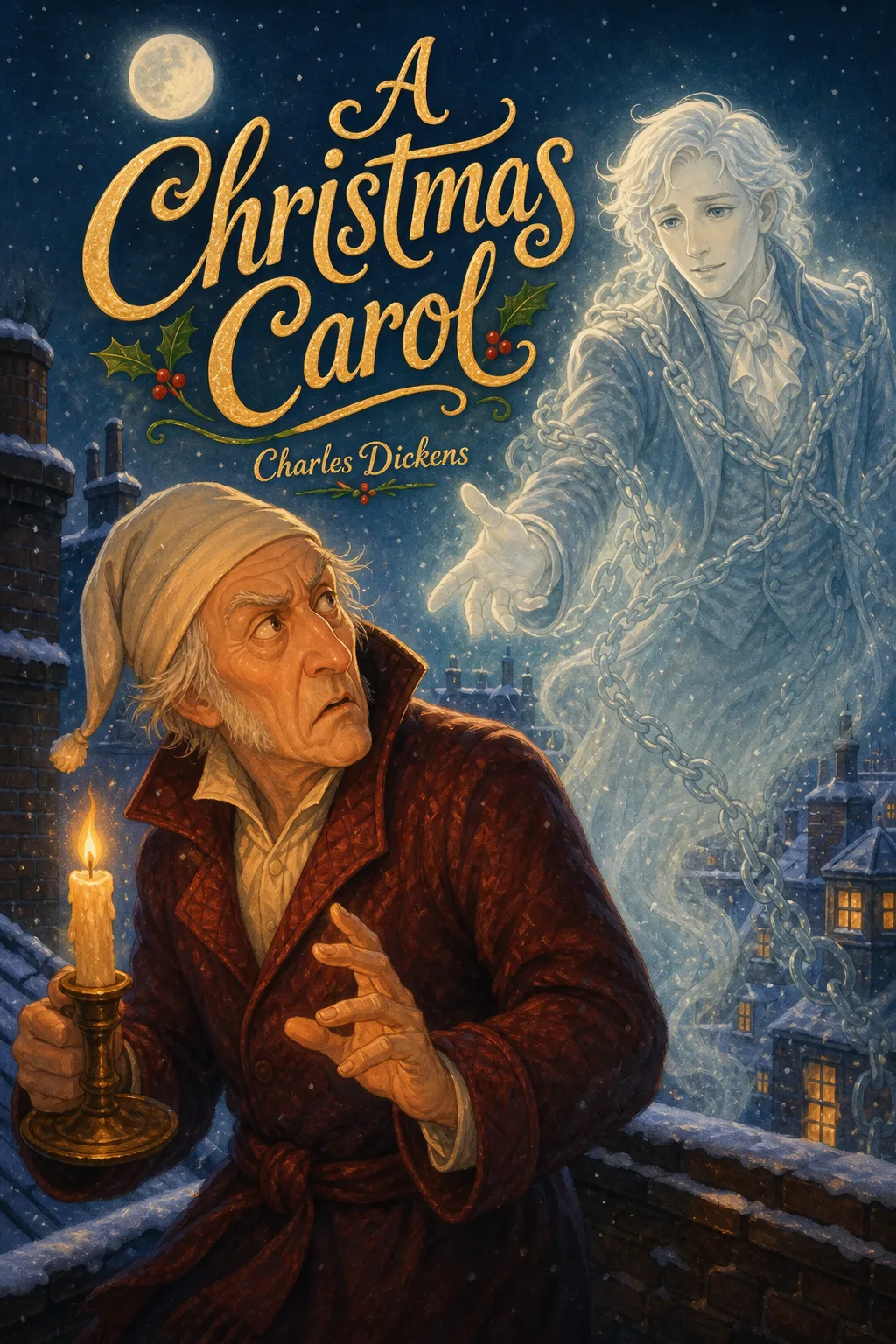
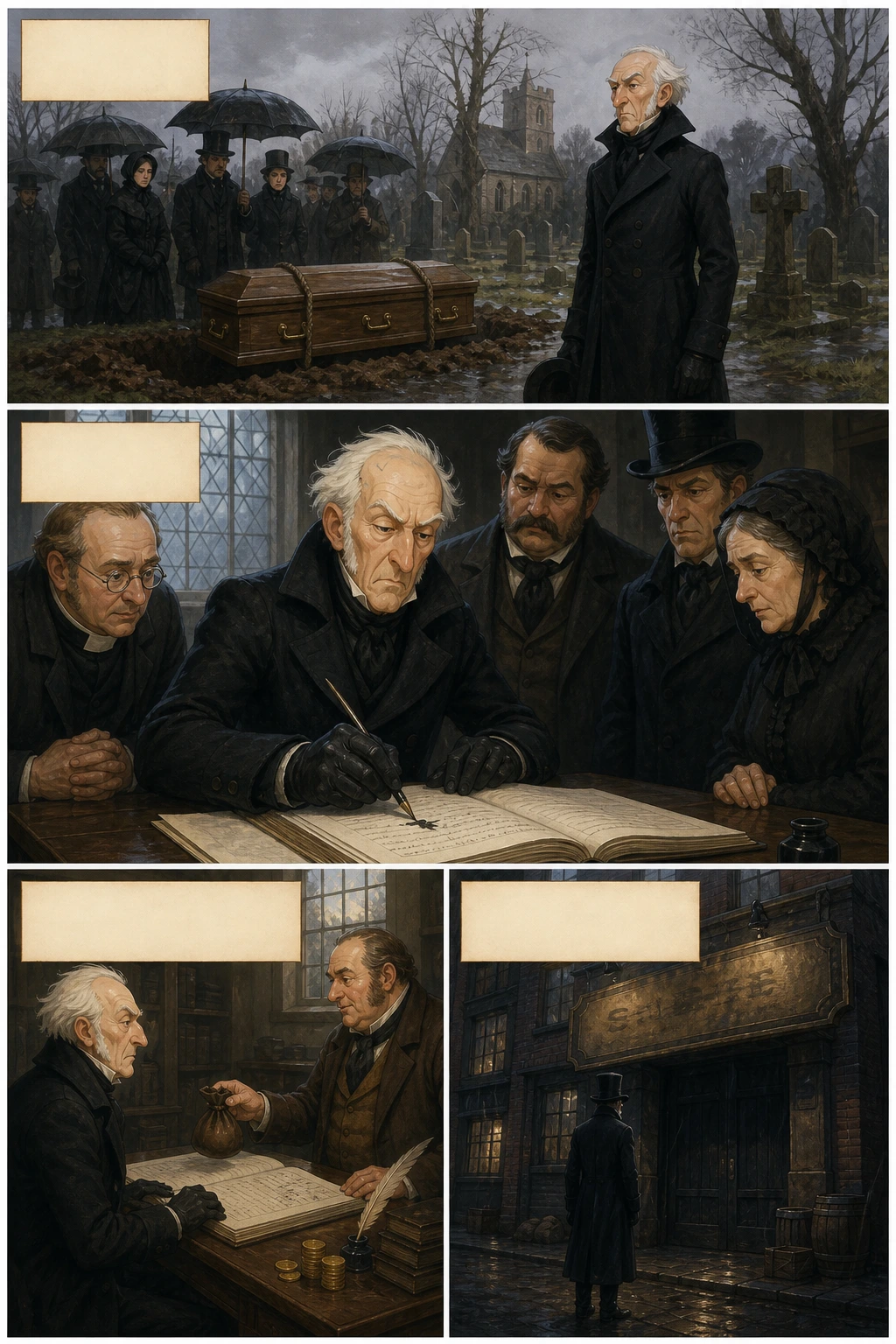
Marley was dead, to begin with. That is where the haunting starts.
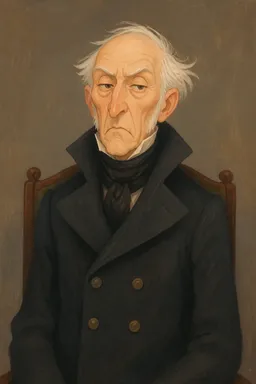
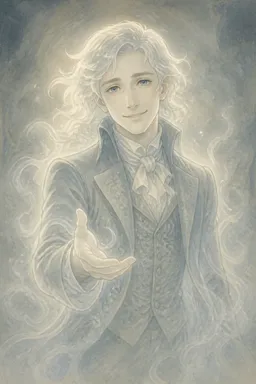
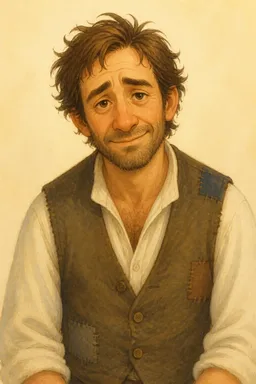

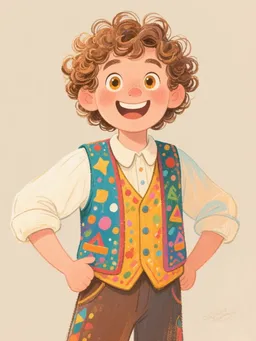
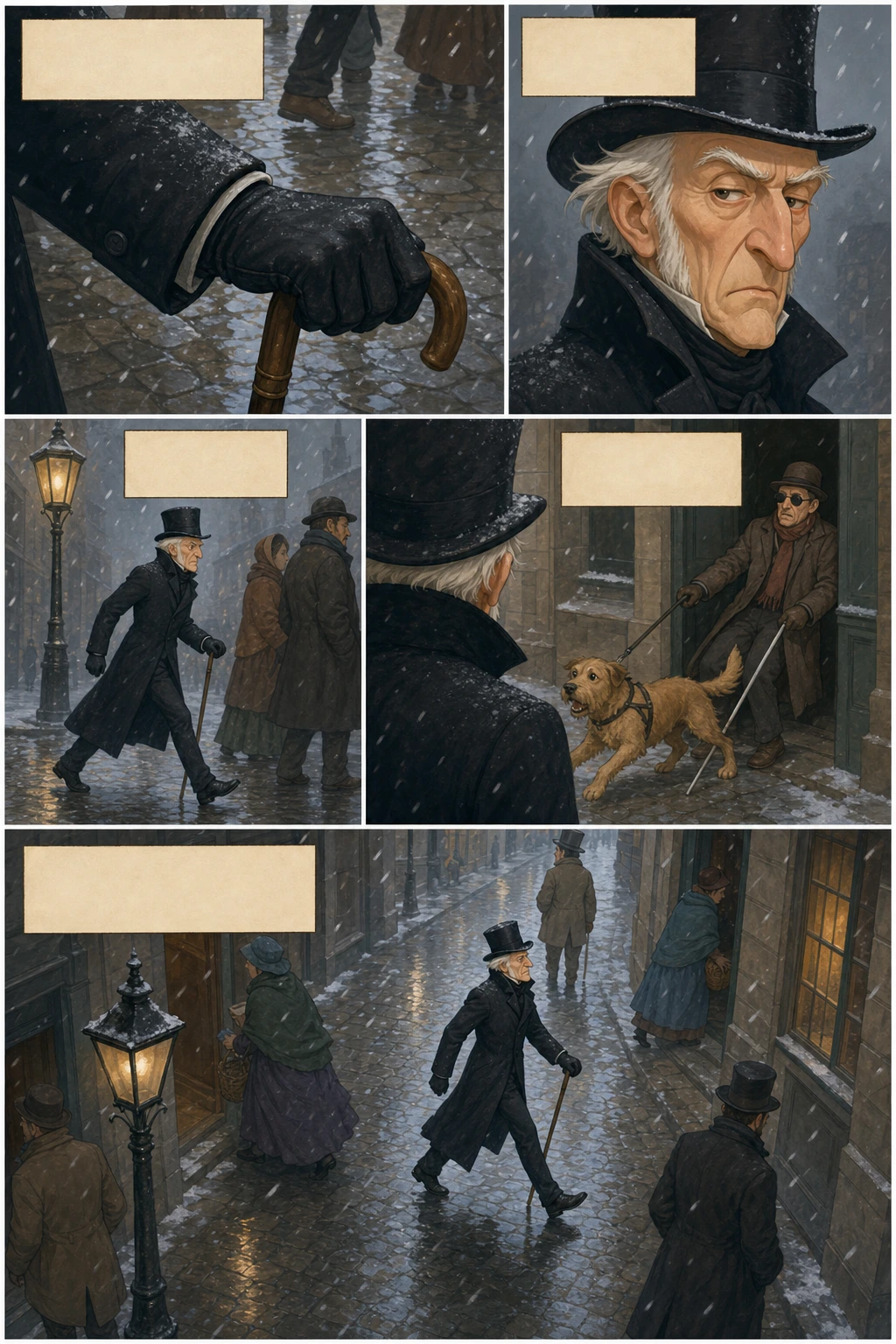
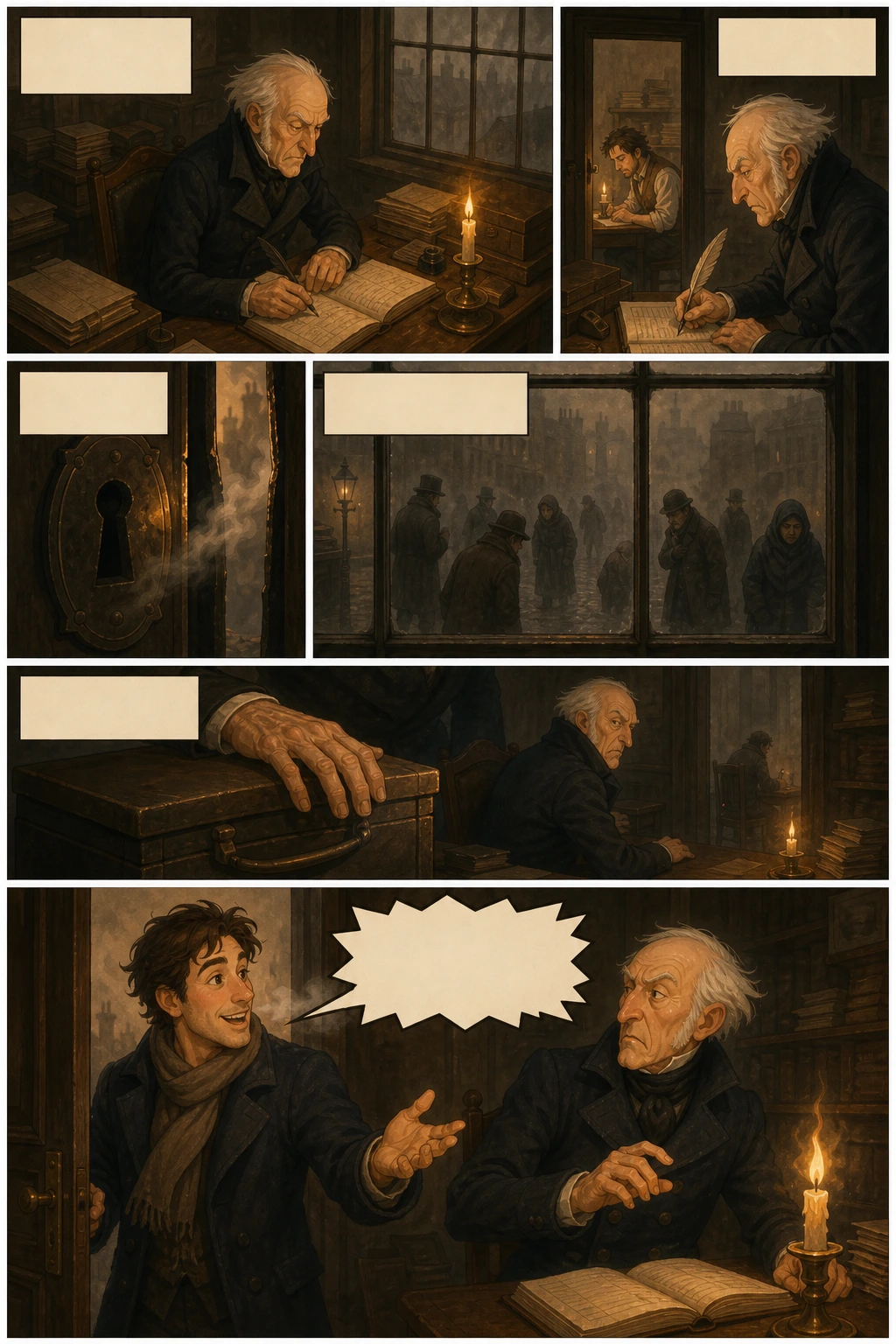
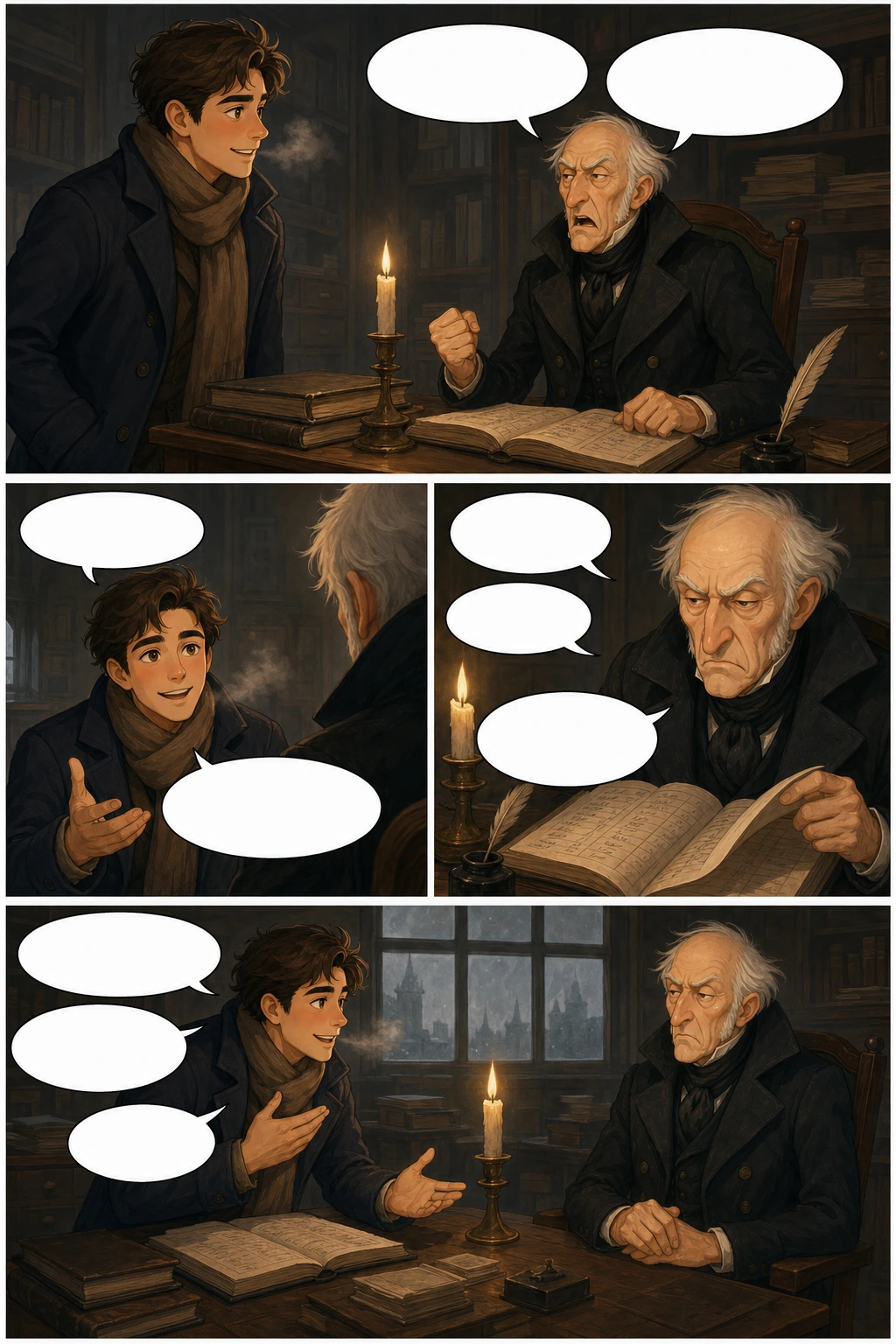
The story opens
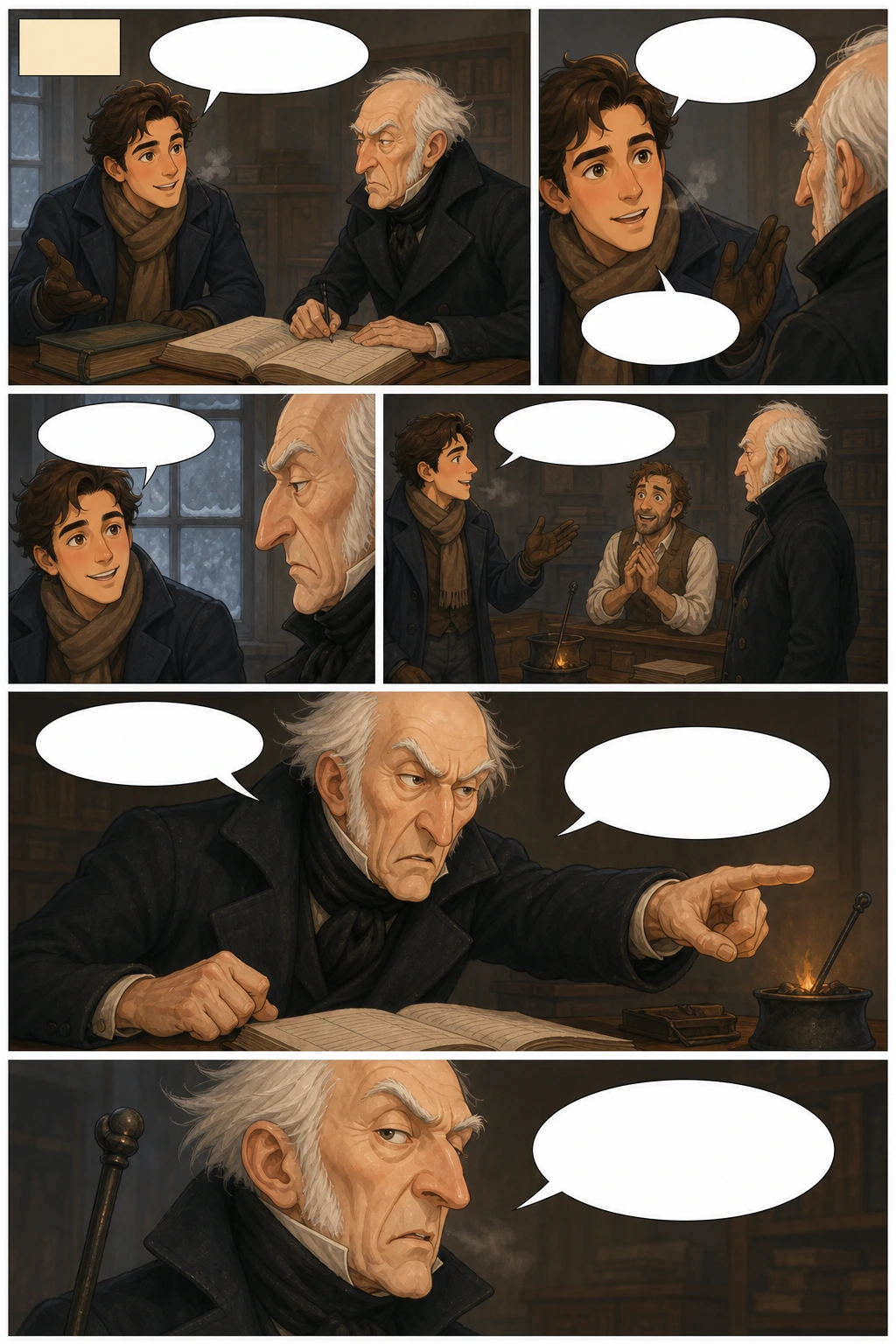
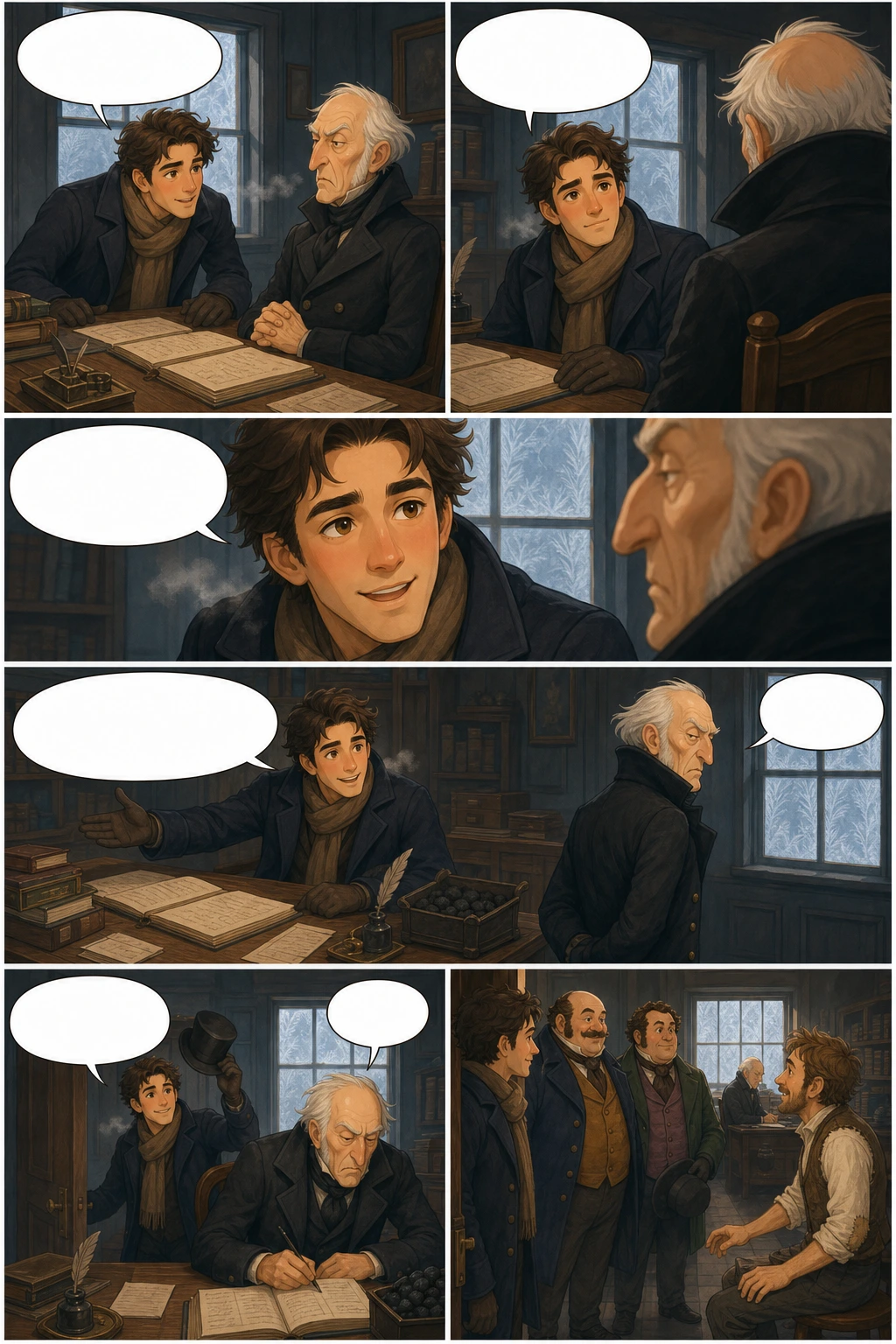
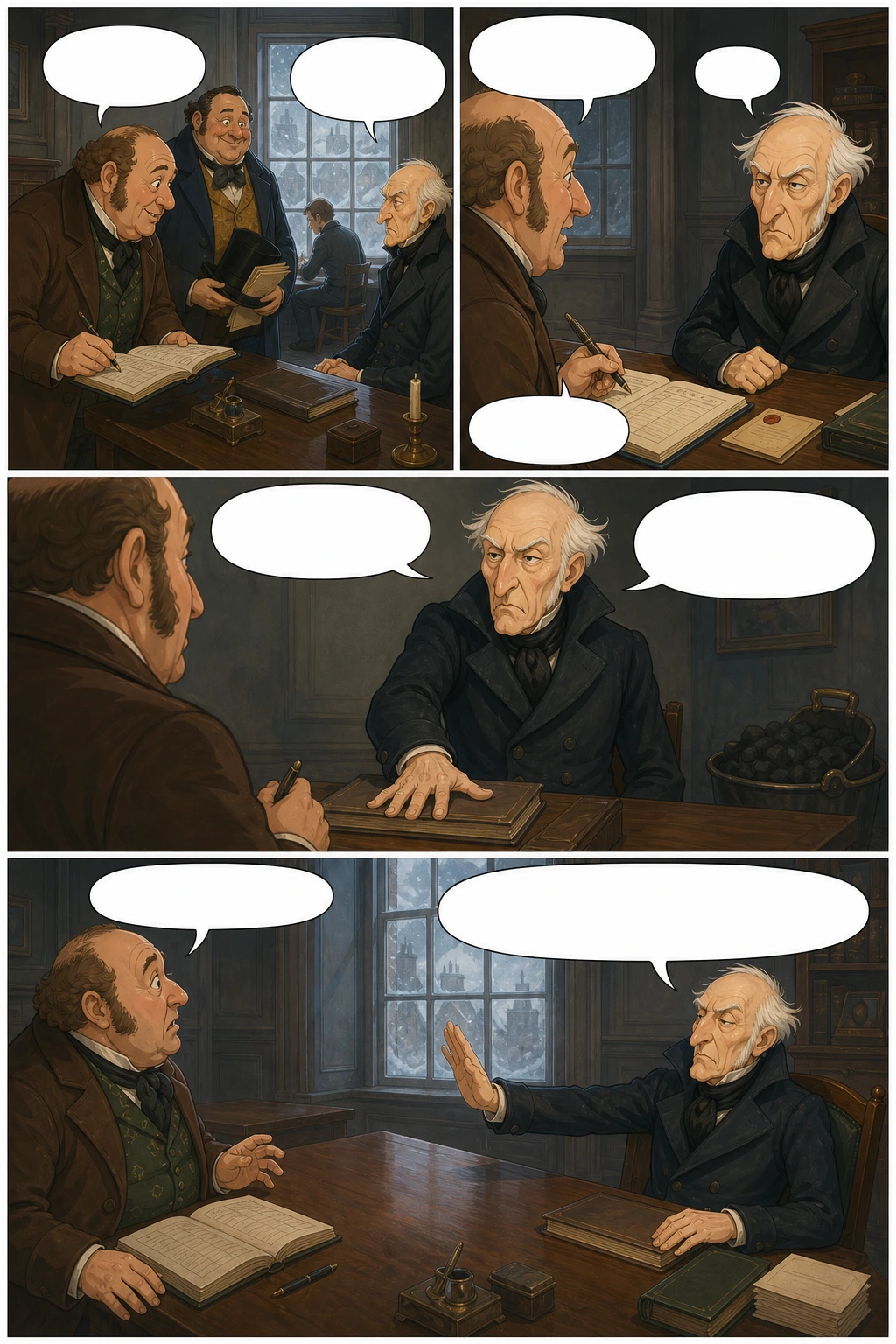
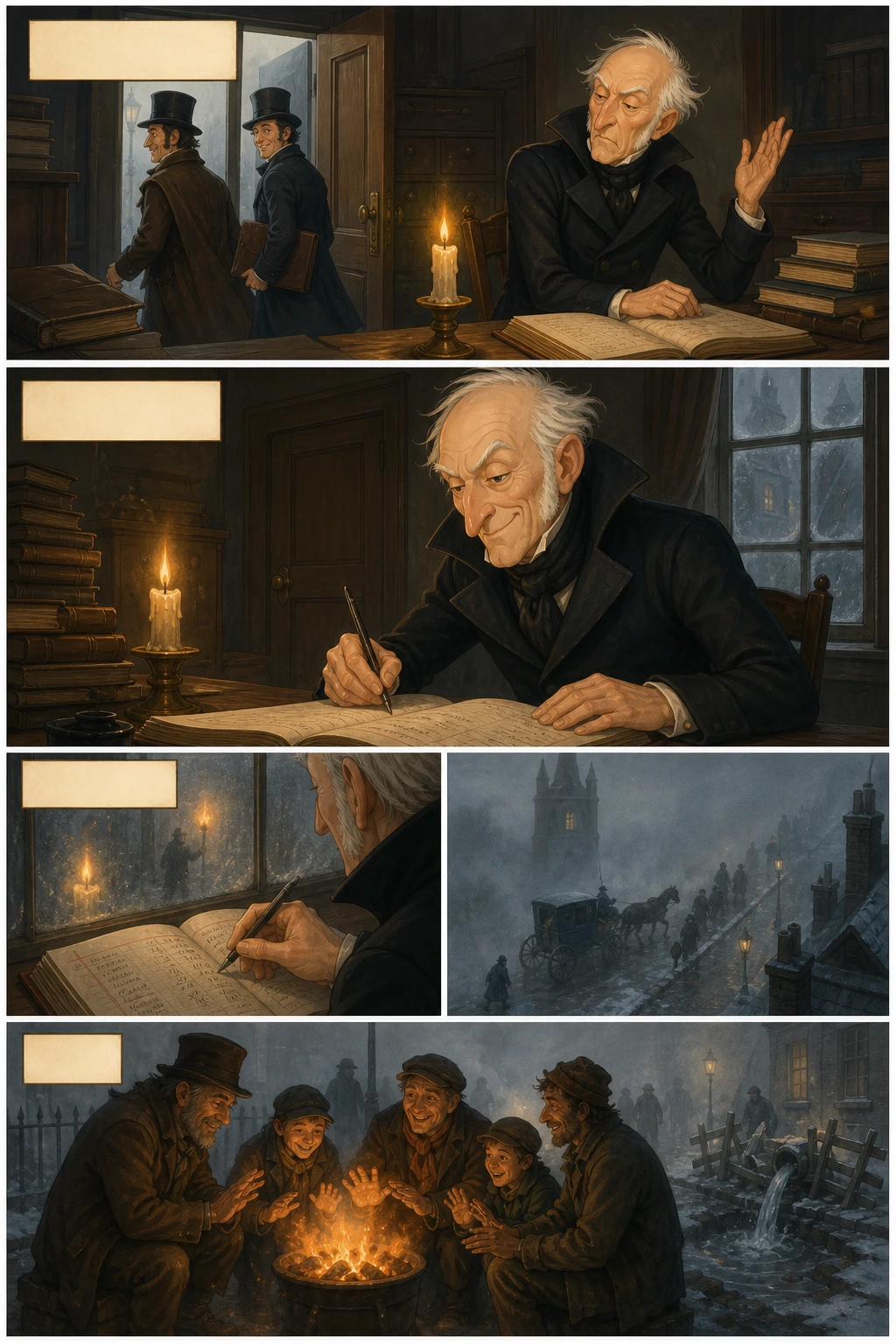
End of the free preview
Unlock the complete comic.
A free account comes with the credits to unlock this complete edition and keep it in your library.
How the cast of A Christmas Carol connects
Drawn from who shares scenes with whom in the original text. Each bond is labeled from the pair's first scene together, so the map stays spoiler-light.
About A Christmas Carol
A Christmas Carol in Prose is a compact Christmas ghost story set amid the fog, frost, counting-houses, and crowded streets of London. It brings you into the world of Ebenezer Scrooge, a wealthy but isolated miser whose coldness reaches his clerk, his cheerful nephew, and the poor people seeking help at Christmas. Around him, Dickens places stark social contrasts: warmth and generosity set against poverty, hunger, and the harsh institutions offered to those in need. The book’s supernatural promise is explicit from its title and chapter structure, which announces Marley’s ghost and three spirits, while its central concern is the possibility of a more humane response to suffering.
Written in 1843, the novella combines vivid Victorian atmosphere with a lively, conversational narrator who interrupts, jokes, exaggerates, and addresses the reader directly. Dickens’s prose can be richly descriptive, sharply satirical, and unexpectedly tender; Scrooge’s gruff exchanges provide brisk comedy alongside the darker ghostly mood. This is a good choice for readers drawn to Christmas fiction, haunted tales, London stories, and narratives concerned with misers, poor families, and sick children. Its short length and dramatic structure make it approachable, while its period language rewards a reader willing to enjoy its theatrical phrasing and moral seriousness.
A Christmas Carol by Charles Dickens its book page, where the opening is free to read with no account.
More illustrated classics
Every one opens with a free preview.
Illustrated openings drawn page by page. No signup to start reading.