






Storieta
Try it free
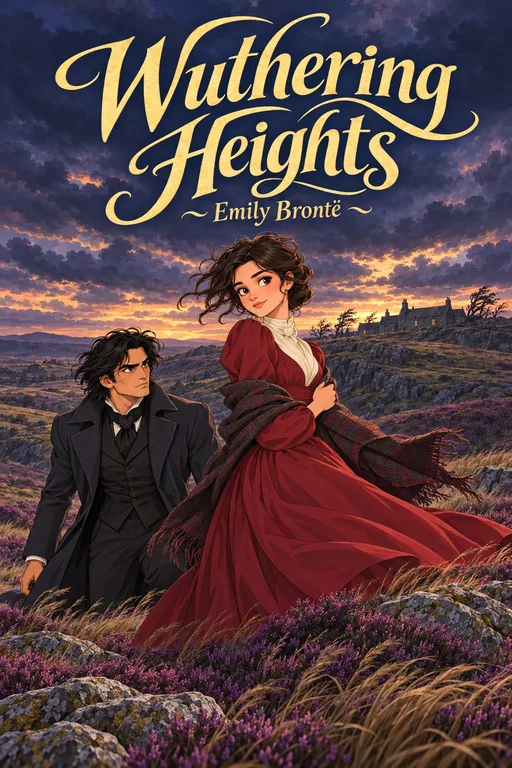
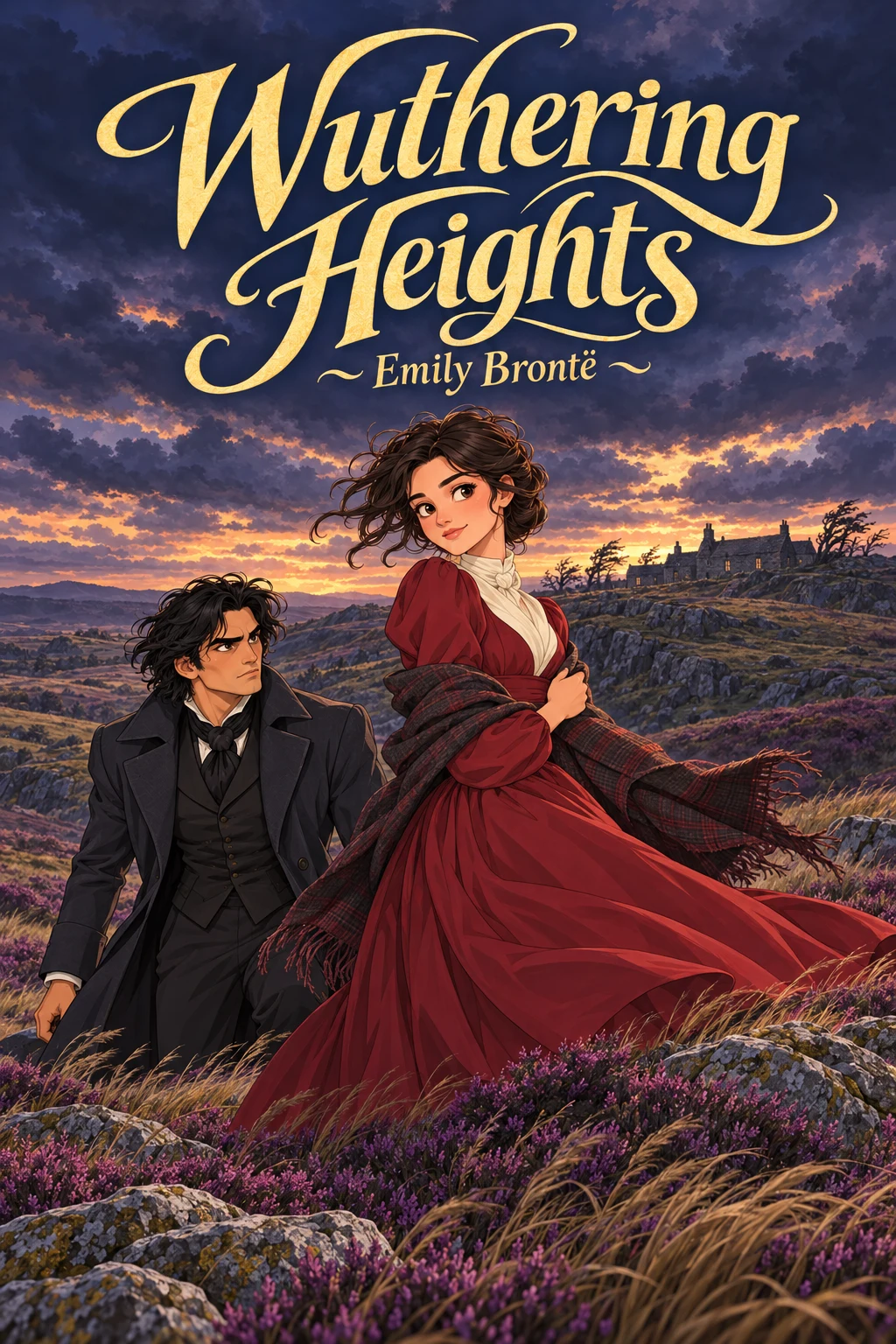
Cover of Wuthering Heights, comic edition

Wuthering Heights

by Emily Brontë1847

A foundling raised on the moors, a love refused, and a revenge that takes a generation.

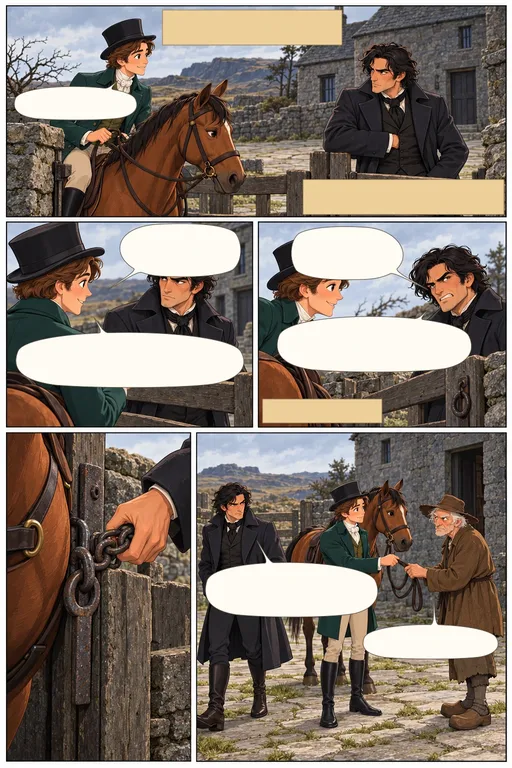
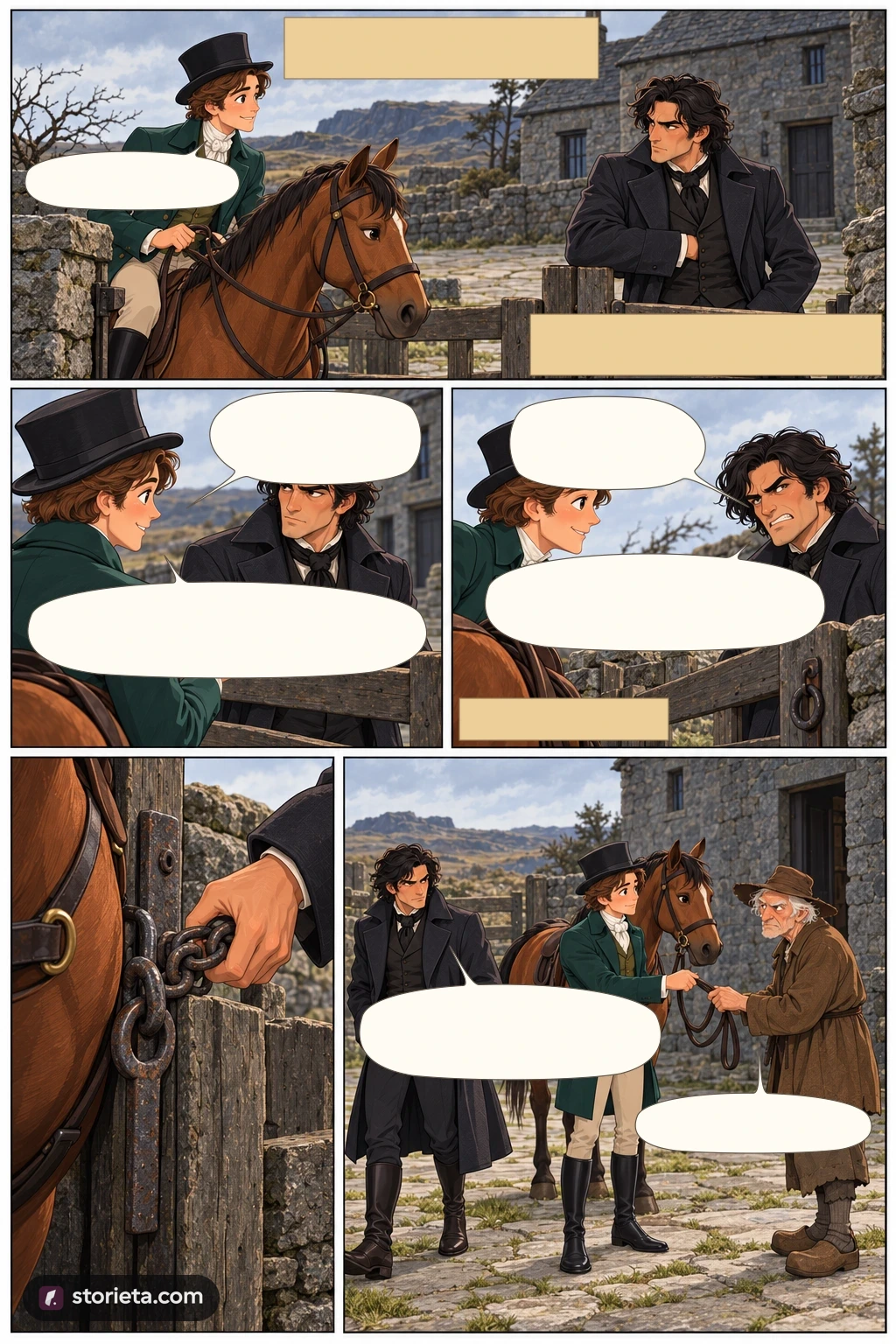
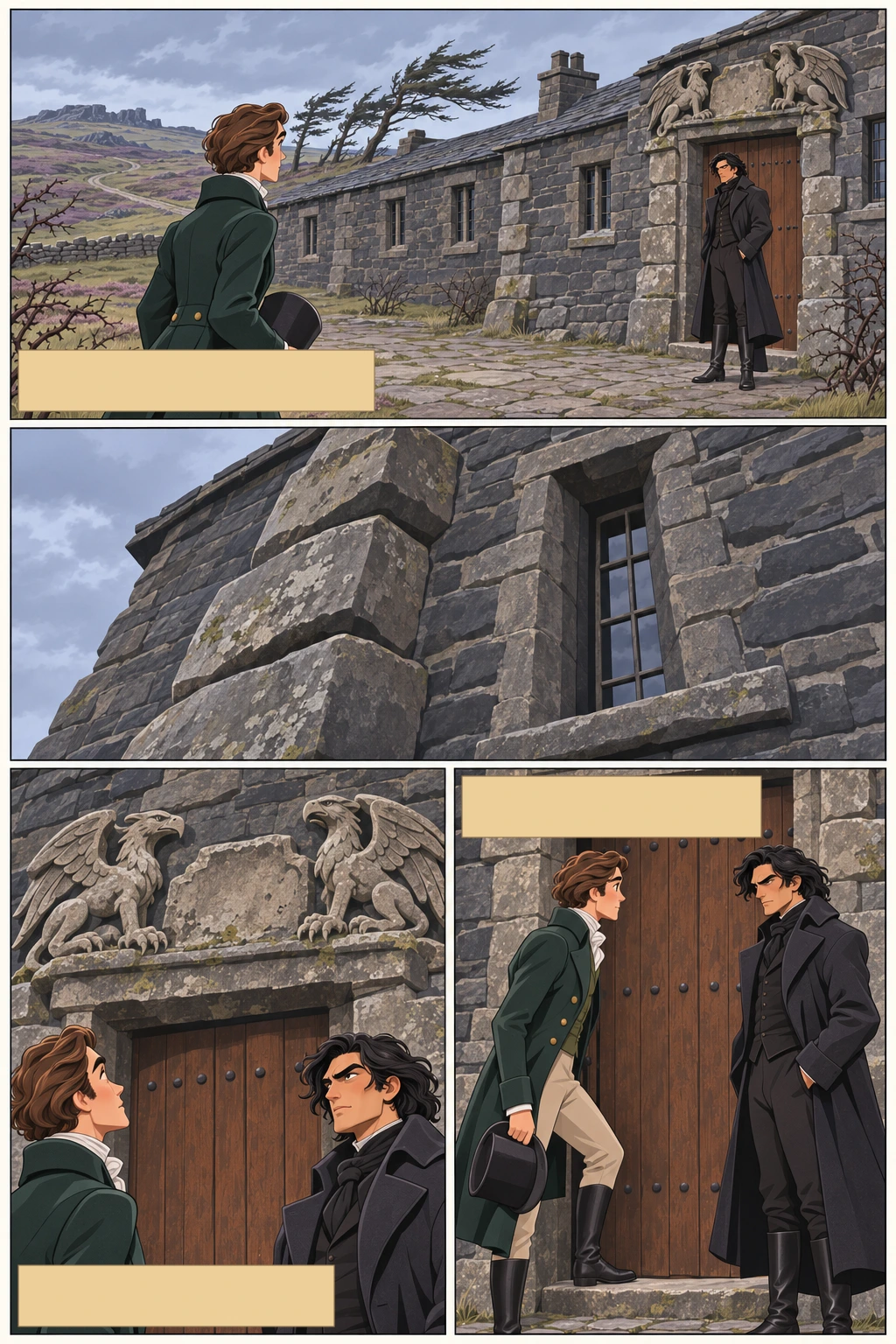
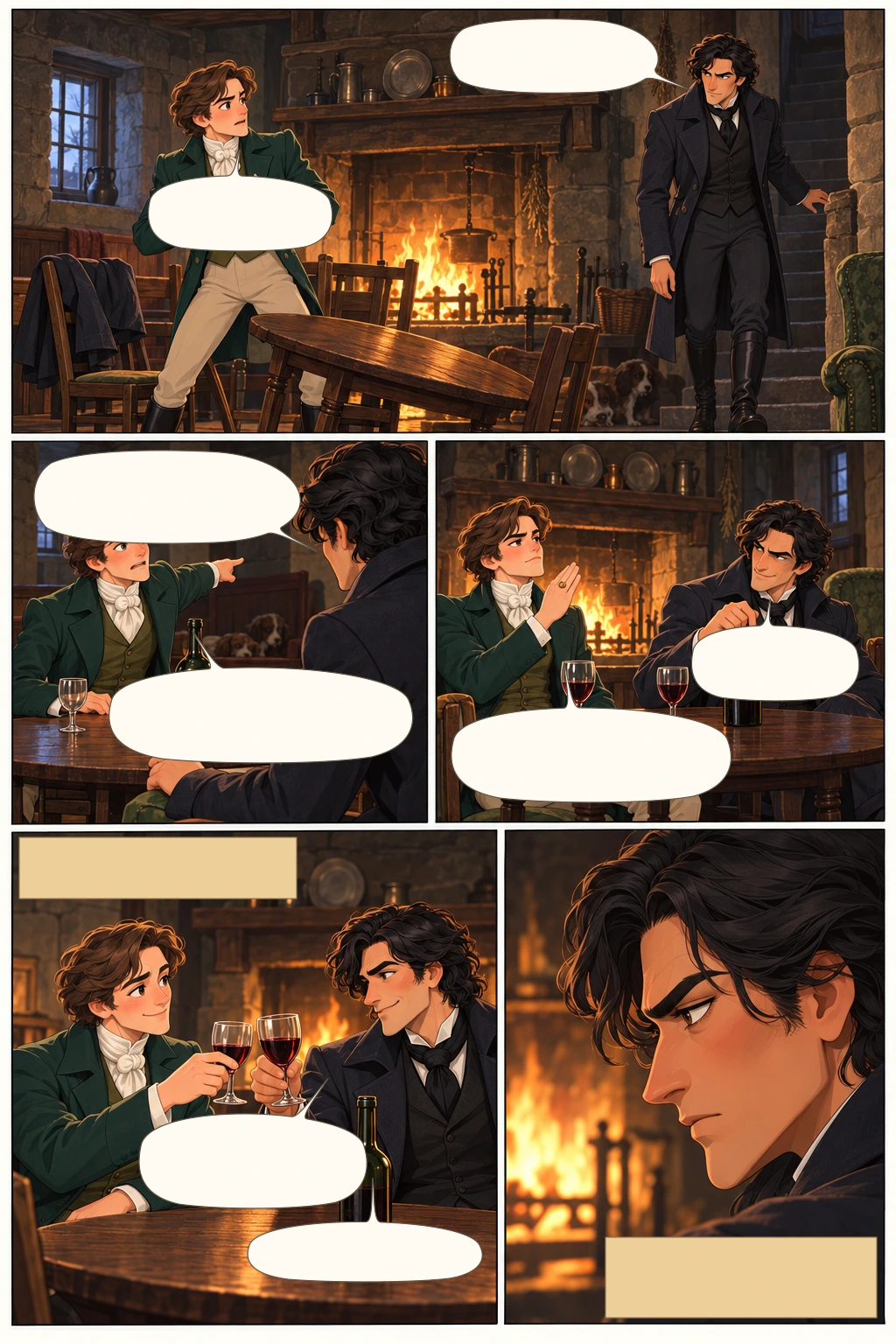
Wuthering Heights, illustrated page 1: I have just returned from a visit to my landlord—
I have just returned from a visit to my landlord—
…the solitary neighbour that I shall be troubled with.
A capital fellow!
Mr. Heathcliff?
Mr. Lockwood, your new tenant, sir.
I hope I have not inconvenienced you in seeking Thrushcross Grange.
Thrushcross Grange is my own, sir.
I should not allow any one to inconvenience me, if I could hinder it. Walk in!
Joseph, take Mr. Lockwood’s horse; and bring up some wine.
The Lord help us!
Wuthering Heights, illustrated page 2: Wuthering Heights is the name of Mr. Heathcliff’s dwelling.
Wuthering Heights is the name of Mr. Heathcliff’s dwelling.
I detected “1500,” and the name “Hareton Earnshaw.”
I had no desire to aggravate his impatience.
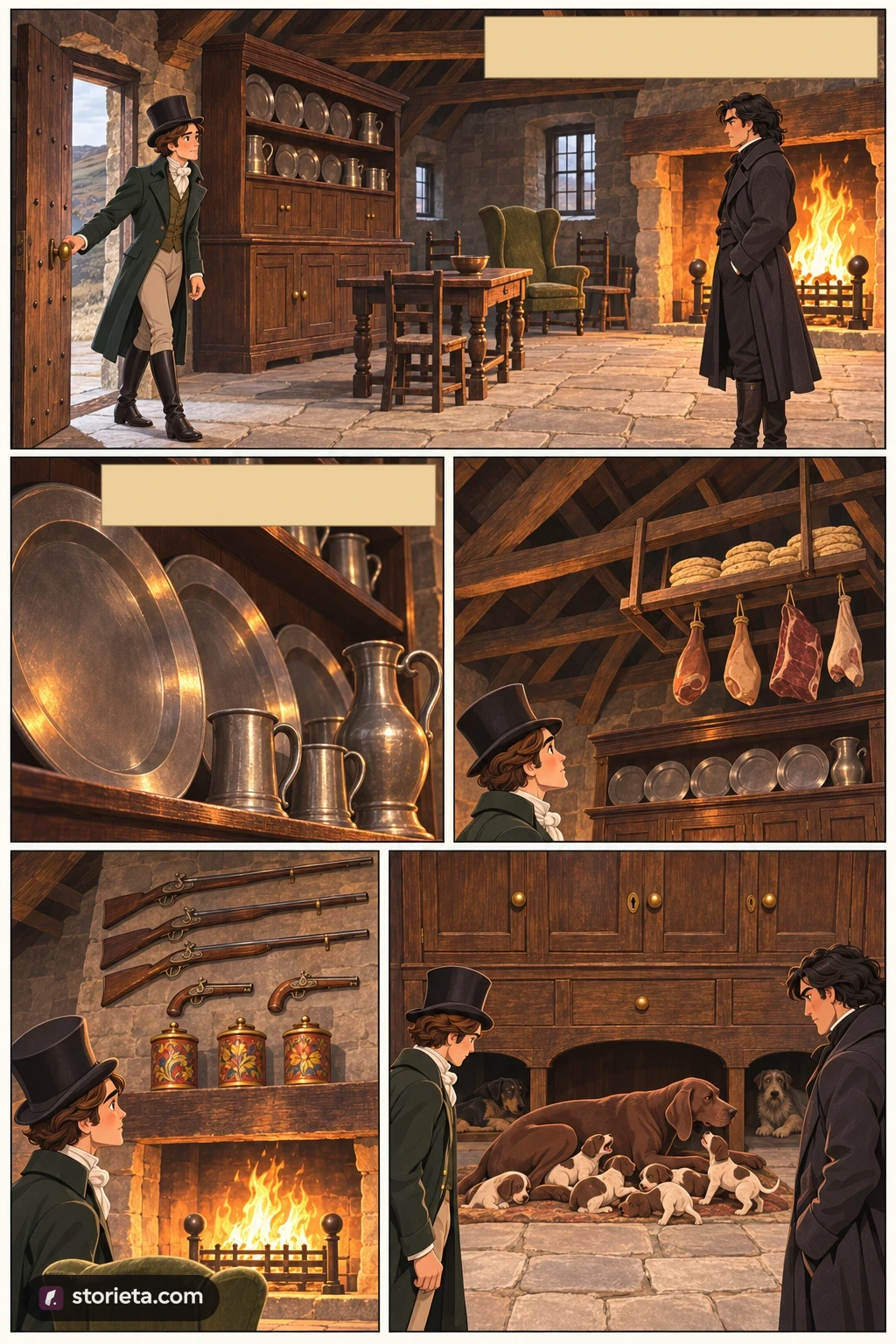
Wuthering Heights, illustrated page 3: One step brought us into the family sitting-room, “the house.”
One step brought us into the family sitting-room, “the house.”
A chatter of tongues and a clatter of pans, deep within.
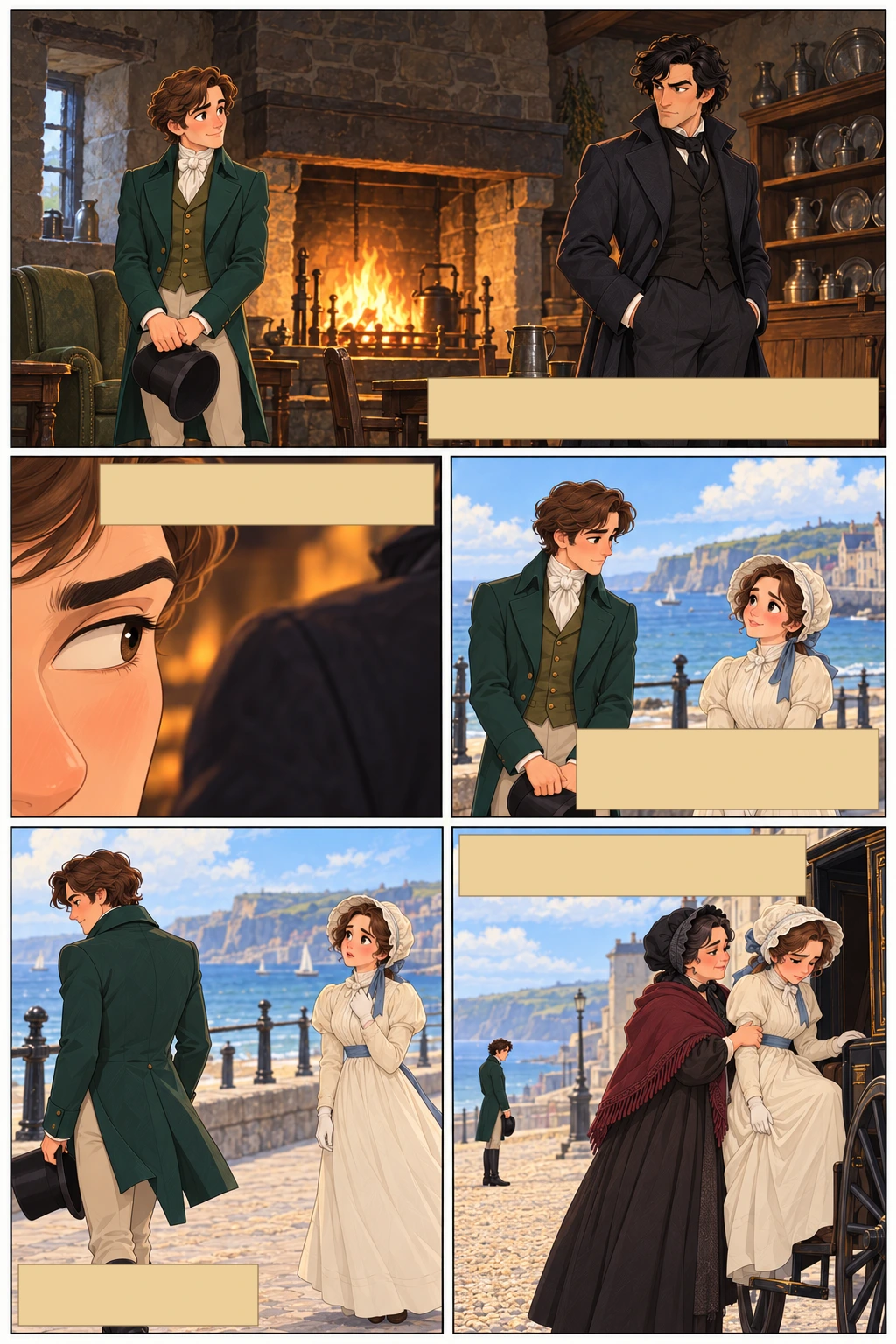
Wuthering Heights, illustrated page 4: The furniture is homely; Mr. Heathcliff forms a singular contrast.
The furniture is homely; Mr. Heathcliff forms a singular contrast.
I bestow my own attributes over-liberally on him.
Only last summer, at the sea-coast, I met a most fascinating creature.
I shrunk icily into myself, like a snail.
I have gained the reputation of deliberate heartlessness.
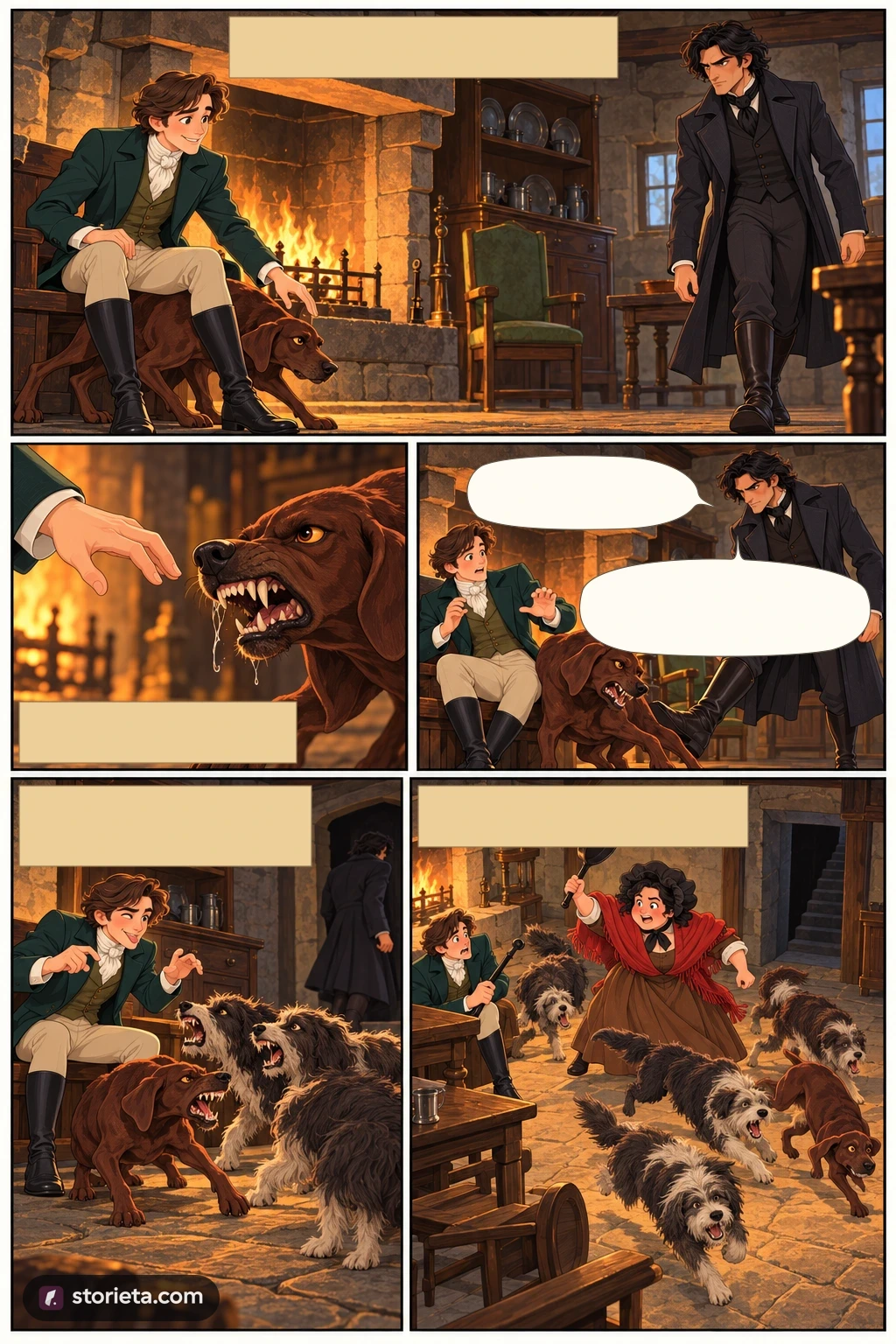
Wuthering Heights, illustrated page 5: I took a seat at the hearthstone opposite my landlord.
I took a seat at the hearthstone opposite my landlord.
My caress provoked a long, guttural gnarl.
Heathcliff dived down to Joseph. I unfortunately made faces at the trio.
Happily, an inhabitant of the kitchen made more dispatch.
You’d better let the dog alone.
She’s not accustomed to be spoiled, not kept for a pet.
Wuthering Heights, illustrated page 6: What the devil is the matter?
I volunteered another visit to-morrow.
It is astonishing how sociable I feel myself compared with him.
What the devil is the matter?
What the devil, indeed!
You might as well leave a stranger with a brood of tigers!
They won’t meddle with persons who touch nothing.
Not bitten, are you?
If I had been, I would have set my signet on the biter.
Come, come, you are flurried, Mr. Lockwood.
Your health, sir?
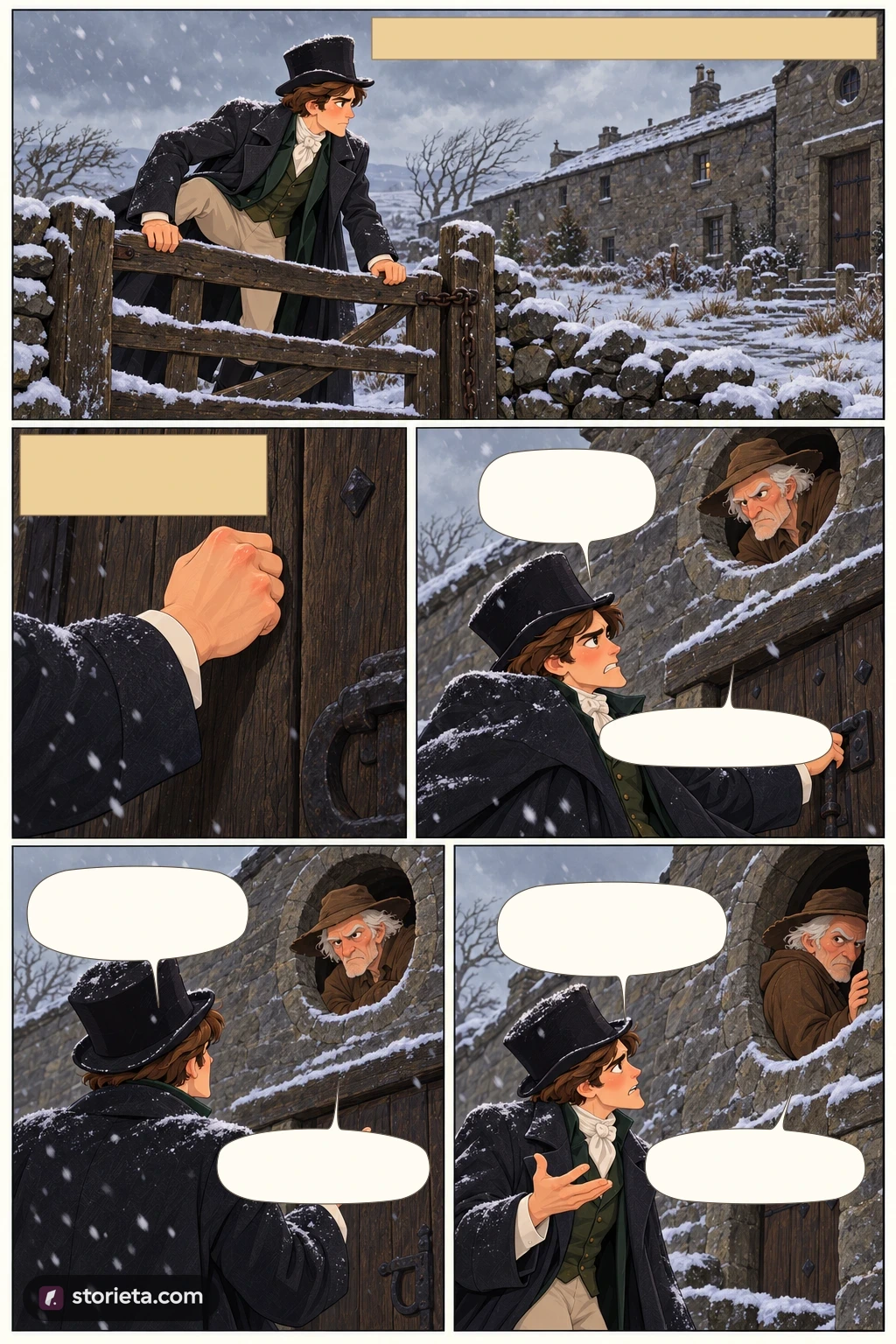
Wuthering Heights, illustrated page 7: Yesterday afternoon set in misty and cold.
Yesterday afternoon set in misty and cold.
I knocked vainly for admittance, till my knuckles tingled.
I don’t care—I will get in!
What are ye for?
Is there nobody inside to open the door?
There’s nobbut t’ missis.
Cannot you tell her whom I am, eh, Joseph?
Not me! I’ll hae no hand wi’t.
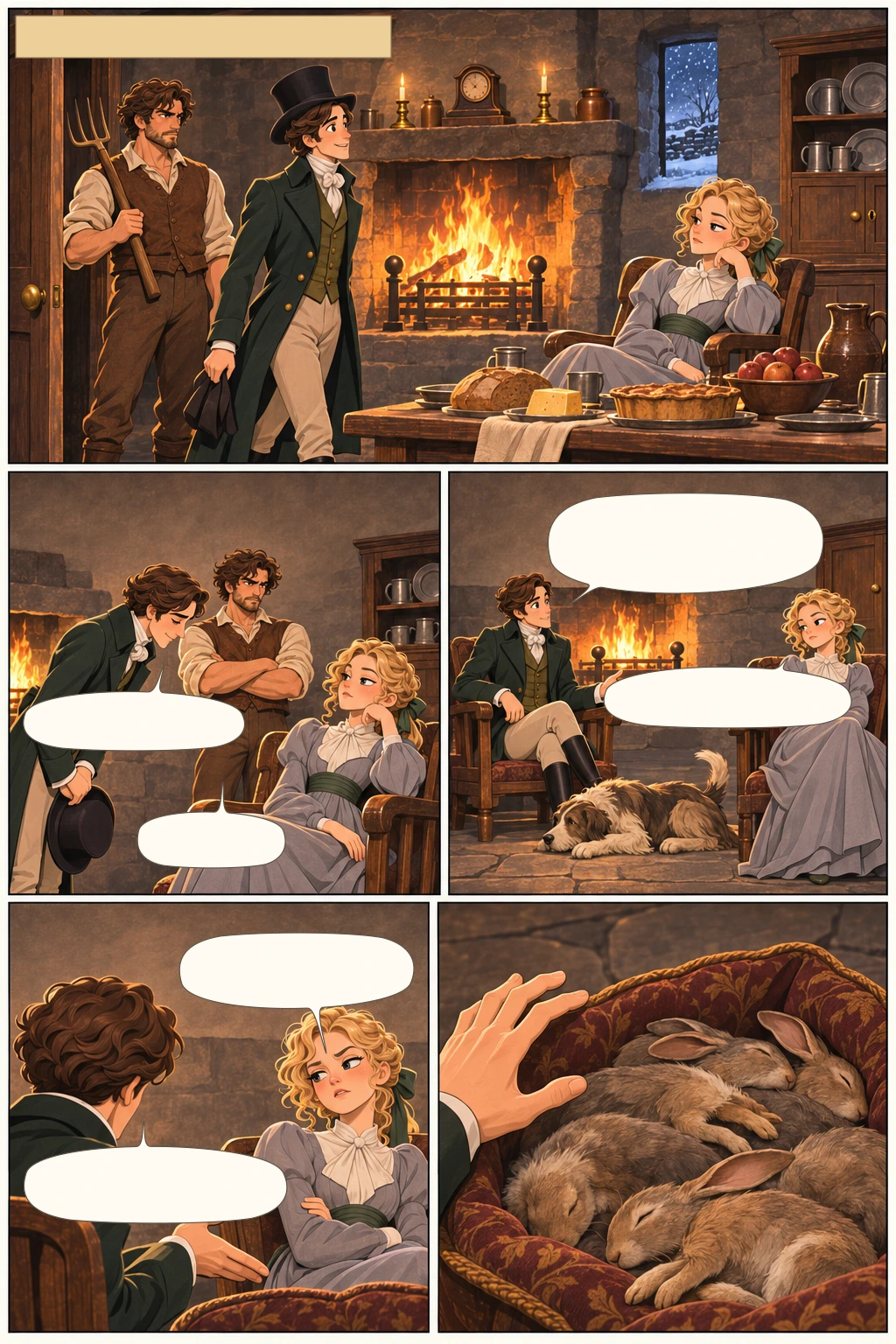
Wuthering Heights, illustrated page 8: The snow began to drive thickly.
The snow began to drive thickly.
Rough weather!
Sit down.
Do you intend parting with the little ones, madam?
They are not mine.
Ah, your favourites are among these?
A strange choice of favourites!

End of the free preview
Comic edition

Read the rest of Wuthering Heights

Every comic in our library, and every book you bring, drawn as you read. Cancel anytime.

Continue with Reader · $4.99/mo

About Wuthering Heights

Wuthering Heights is a dark, atmospheric novel of Yorkshire isolation, charged encounters, and deeply guarded feeling. At its center is the remote household of Wuthering Heights, where tenant Mr. Lockwood meets the suspicious, reserved Mr. Heathcliff and finds himself drawn into an inhospitable world of bleak weather, austere rooms, hostile dogs, and tense domestic relations. The book’s concerns include love, rejection, pride, revenge, and the psychology of people who struggle to express, or withstand, their emotions. Its setting is not merely scenery: the wind-battered house and surrounding moors give the story a sense of exposure, confinement, and brooding unease.

Emily Brontë writes with vivid physical detail and a sharp ear for social friction. The narration combines Lockwood’s wry, self-conscious observations with clipped dialogue, comic discomfort, local speech, and sudden intimations of menace. First published in the Victorian period, the novel has a strongly Gothic atmosphere while remaining rooted in domestic life and the particulars of northern England. It may appeal to readers who enjoy psychologically intense love stories, dramatic family tensions, memorable settings, and narrators whose judgments are as revealing, and questionable, as the people they describe.

Wuthering Heights by Emily Brontë

More illustrated classics

Every one opens with a free preview

Illustrated openings drawn page by page. No signup to start reading.
Browse all illustrated classics

Keep reading in Storieta17 pages free · The rest with ReaderSign up free

Read the rest of Wuthering Heights

Plus every other comic in our library

Continue with Reader · $4.99/mo